Summer 25% discount on all last year's bike models

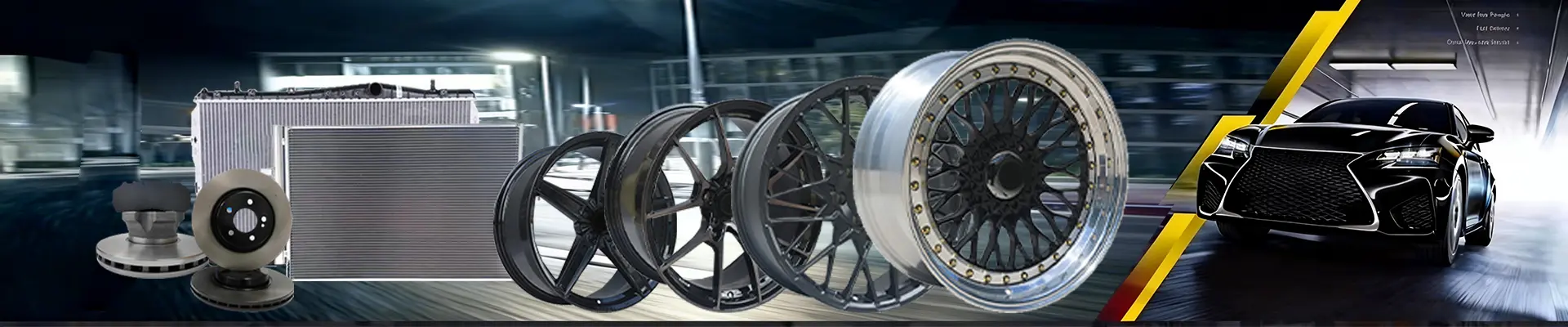
Buy Wholesale Wheel Rims | Factory Direct OEM Supplier

Buy Wholesale Wheel Rims | Factory Direct OEM Supplier
Most buyers assume bigger wheels cost more. The real cost cliff has nothing to do with diameter — it is surface finish complexity and certification tier that drive the majority of price variance.
When you source wheel rims in bulk, the per-piece price you see on a spreadsheet is only the starting line. The actual landed cost per unit swings dramatically based on whether you need a basic gloss black spray or a machined face paired with hyper silver inner barrels, whether your order hits the custom production threshold, and whether your target market demands VIA, JWL, DOT, or TÜV paperwork that takes weeks to prepare. Understanding these levers before you request a quote is what separates buyers who lock in factory-direct pricing from those who get trapped in requote loops and margin-killing delays [NEED_CITE: cost driver hierarchy in alloy wheel manufacturing per SEMA supply chain reports].
Let me break down exactly where wholesale wheel rim pricing comes from, based on years of watching containers roll through Shekou port and seeing what happens when specs drift even slightly from what the buyer actually needed.
What Determines Wholesale Wheel Rim Pricing?
Surface finish accounts for the single largest cost swing between two wheels of identical diameter and structure. A 18-inch five-spoke design in matte black paint sits at the bottom of the cost ladder. Move that same wheel to chrome plating, and the processing steps multiply — copper base, nickel strike, chrome top coat, each requiring separate dipping, curing, and inspection. Push further into machined face combined with a contrasting inner barrel color, and you are adding CNC lathe time plus a second paint or powder coat cycle with precise masking. Full forged construction adds yet another tier, where the raw material itself and the press-tonnage hours dominate the quote.
The diameter matters, obviously — a 22-inch wheel uses more alloy than a 15-inch — but the material cost difference is linear and predictable. What catches buyers off guard is the non-linear jump from one finish tier to the next [NEED_CITE: surface treatment cost escalation curve in alloy wheel production].
I once watched a Middle East distributor reject an entire container of 18-inch multi-spoke wheels because the inner barrels came out fully machined bright instead of hyper silver. The data sheet clearly called for that contrast — it is the look that market expects. The factory had run them all bright, which to a Gulf-end buyer reads as a budget product. The rework discussion lasted weeks, the goods eventually went to a Southeast Asian tuning shop at a steep discount, and the freight plus demurrage wiped out whatever margin existed. That is what a finish spec mismatch costs in real terms.
| Finish Tier | Process Steps | Relative Cost Level | Lead Time Impact |
|---|---|---|---|
| Single-color paint (gloss/matte black, gunmetal) | Spray or powder coat, cure, QC | Baseline | Shortest |
| Chrome plating | Multi-layer electroplating line | Noticeably higher | Extended |
| Machined face + contrasting inner barrel | CNC machining + masked second coat | Substantially higher | Noticeably extended |
| Full forged + custom finish | Forging press + heat treat + CNC + finish | Highest tier | Longest |
The takeaway: when you compare quotes from two factories and one is significantly cheaper, check whether they priced the same finish tier. A machined-and-painted wheel and a painted-only wheel of the same size are not the same product, even if the diameter and bolt pattern match [NEED_CITE: alloy wheel surface treatment classification per industry finishing standards].
Wholesale Price Tiers by Order Volume
The per-unit price drops sharply once your order crosses the custom production threshold — stock models at low MOQ and custom runs at higher volume sit in completely different pricing zones.
Factories maintain inventory of popular sizes and finishes — typically 15-inch through 18-inch in black, silver, and machined face for the most common vehicle fitments. These stock wheels can ship in small quantities because they are already made, already finished, and sitting in the warehouse. The MOQ for stock models is low, sometimes as few as a few dozen pieces, but the per-piece price reflects the retail-adjacent nature of the transaction. You are buying finished goods, not commissioning production.
Custom orders change the economics entirely. When you request a specific color that is not in the standard palette — say, a bronze that matches a particular brand’s catalog, or a gunmetal with a subtle lip highlight — the factory must mix custom paint, run color-matching samples, get your approval, and then commit a production slot. That process involves setup costs, color-matching labor, and minimum paint-batch quantities that only make sense at volume. The per-unit price at the custom threshold is often significantly lower than stock pricing because the factory amortizes those setup costs across more pieces [NEED_CITE: MOQ economics in alloy wheel batch production].
A Southeast Asian tuning shop I worked with ordered small batches of custom-color 20-inch wheels for niche fitments. Their first few orders were in the stock range — they picked from what was available and paid accordingly. Once they committed to a signature color across multiple sizes and hit the custom production volume, the per-piece cost dropped noticeably. The trade-off was lead time: stock ships fast, custom requires patience for sampling and production scheduling.
| Order Type | Typical MOQ Range | Pricing Zone | Lead Time |
|---|---|---|---|
| Stock models (standard sizes and finishes) | Low MOQ, pieces-level | Higher per-unit cost | Fastest |
| Custom color / finish, moderate volume | Medium MOQ threshold | Noticeably lower per-unit | Standard production cycle |
| OEM / private-label, high volume | Full production run | Lowest per-unit tier | Longest, includes certification lead time |
The pricing breakpoint is real and verifiable. If a supplier quotes you the same per-piece price for twenty stock wheels and two hundred custom wheels, something is off — either the custom quote is padded, or the stock quote is inflated. Transparent factory-direct pricing shows a clear step-down as volume increases past the production-commitment point [NEED_CITE: wholesale pricing structure in automotive aftermarket wheel supply chains].
Hidden Costs: Certification, Customs & Rework
Missing certification documents or finish mismatches do not just delay your shipment — they generate demurrage, reinspection fees, and in worst cases, forced return shipments that erase the savings you chased by choosing the lowest quote.
Every major market has its own wheel certification requirement. The United States requires DOT compliance documentation. Japan demands JWL or VIA marking and test reports. China’s domestic market requires CCC. Europe looks for TÜV or KBA approval. These are not optional stickers — they are paperwork packages that the factory must prepare, submit to the certifying body, and have validated before the wheels can legally clear customs in the destination country.
The cost of certification itself is one thing. The cost of not having it when the container arrives is another entirely.
An African OEM buyer sourced 15-inch and 16-inch wheels to replace steel rims on a local vehicle assembly line. The price was right, the samples were approved, and the production ran on schedule. What nobody checked early enough was whether the certification documents matched the specific destination country’s import requirements. The container sat at port for weeks while the buyer scrambled to get supplementary paperwork from the factory. Demurrage charges accumulated daily. By the time the wheels cleared customs, the extra costs had consumed a substantial portion of the original price advantage.
| Risk Category | Trigger | Typical Consequence |
|---|---|---|
| Missing or mismatched certification | DOT/VIA/JWL/CCC docs not prepared for destination market | Customs hold, demurrage accumulation |
| Finish deviation from approved sample | Factory runs wrong color or machining without buyer sign-off | Rejection, forced discount resale, rework cost |
| Packaging non-compliance | Pallets or carton markings do not meet destination port rules | Inspection delay, repacking cost at port |
| Dimensional drift beyond tolerance | Bolt pattern or center bore off-spec | Fitment failure, return or scrap |
The pattern is consistent: the cheapest quote becomes the most expensive order when documentation and spec compliance are not locked down before production starts. Certification lead time alone can add weeks to your timeline, and that timeline cost must be part of your real per-unit calculation [NEED_CITE: customs documentation requirements for alloy wheel imports per HS code classification].
How to Request an Accurate Wholesale Wheel Rim Quote
The fastest way to get a quote that actually matches your landed cost expectation is to specify finish code, certification target, and packaging requirement in your very first inquiry — not after the third round of clarification.
Most requote cycles happen because the initial inquiry was vague. A buyer asks for "18-inch alloy wheels, black, five thousand pieces." The factory quotes based on gloss black paint, standard packaging, and no specific certification. Two weeks later, the buyer clarifies that they need machined face with a black inner barrel, TÜV paperwork for the German market, and Amazon-ready individual carton packaging with foam inserts. The quote changes — significantly — because the product being described is fundamentally different from what was first priced.
Here is what a complete inquiry should include to avoid those cycles:
- Diameter, width, bolt pattern, offset, and center bore — the full fitment spec, not just diameter
- Finish code — specify the exact color name or code from the factory’s catalog, or provide a Pantone/RAL reference for custom colors; state whether the face and inner barrel share the same finish or require contrast
- Certification target — name the specific market (US, Japan, EU, China, etc.) so the factory knows which certification documents to prepare
- Order volume — state whether you are in the stock range, the custom production range, or the OEM high-volume range; this determines which pricing tier applies
- Packaging requirement — standard export carton, individual retail box with branding, or pallet configuration for container loading
- Private-label or branding needs — center cap logo, laser engraving, box artwork — these add setup steps that must be quoted upfront
When all of these elements are in the first message, the factory can return a quote that reflects the real product, the real paperwork, and the real packaging — not a placeholder number that will change once the details emerge.
Factories that operate across multiple certification systems and maintain in-house finishing lines can respond to these complete inquiries with binding quotes rather than estimates. The difference is operational: a factory that controls its own painting, machining, and certification documentation workflow does not need to subcontract and wait for third-party turnaround times, which means the quote you receive is the quote you pay — provided your spec does not change mid-production [NEED_CITE: vertical integration advantages in alloy wheel manufacturing supply chain].
Conclusion
Wholesale wheel rim pricing is driven by finish complexity, volume tier, and certification scope — not diameter alone. Buyers who specify these three variables precisely in their initial inquiry avoid requote delays, catch hidden cost traps before production starts, and lock in factory-direct pricing that reflects the actual product they need. The gap between the cheapest-looking quote and the real landed cost is almost always found in surface treatment details, documentation readiness, and packaging compliance — areas where clarity upfront saves far more than any per-piece discount ever could.


