Summer 25% discount on all last year's bike models

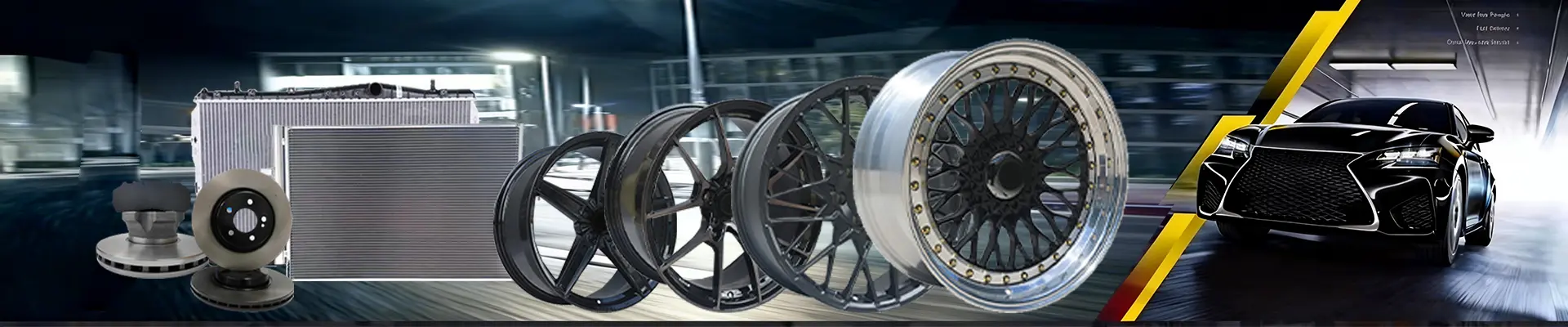
Alloy Wheels Supplier for Russia: China Factory Direct OEM Wholesale

Alloy Wheels Supplier for Russia: China Factory Direct OEM Wholesale
Low-priced alloy wheels often fail faster in Russian winters because cheap surface treatments cannot withstand road de-icing chemicals.
Sourcing from a China factory direct alloy wheels Russia supplier cuts procurement costs substantially while delivering OEM-grade quality, provided you verify fitment specs for Lada and UAZ platforms, secure GOST-R documentation before shipment, and audit salt-spray endurance rather than unit price alone.
I have spent years at our Southeast Asia representative office handling CIS-bound wheel orders, and the Russian market keeps throwing the same avoidable problems at buyers who skip due diligence. Early in my career I worked the quality inspection line, measuring PCD patterns with calipers and running corrosion tests daily. When I moved into trade, I realized product compliance was only half the battle — paperwork, fitment data, and surface durability mattered just as much. A Moscow-based modification shop once ordered a full container of twenty-inch forged wheels routed through Vladivostok. The hub bore was machined to a common passenger-car dimension instead of the larger specification required by Lada Niva platforms. The entire shipment sat at the port unusable, and the client’s installation bays went idle for weeks. After that incident, every Russia-bound order goes through a vehicle-to-wheel fitment cross-check before production begins. [NEED_CITE: hub bore mismatch as a leading cause of aftermarket wheel returns in CIS markets]
Getting the partnership right with an alloy wheels supplier for Russia requires understanding both the technical parameters unique to Russian vehicle platforms and the regulatory framework governing imports. Let me walk through each layer.
How to Verify Alloy Wheel Specs for Russian Cars Like Lada and UAZ?
Russian domestic vehicle platforms use center bore diameters and offset values that differ from mainstream global passenger cars, and ordering by generic catalog numbers alone invites fitment failures.
The core parameters you must align are PCD, center bore, offset, and bolt thread type. Lada models such as the Vesta, Granta, and XRAY typically share a common bolt pattern, while older Niva and Niva Travel platforms require a distinctly larger center bore. UAZ Patriot and Pickup models carry yet another combination. When buyers copy specifications from a generic Asian-market catalog without cross-referencing the Russian vehicle registry, the wheels may bolt on but sit at incorrect offsets, causing fender rub or suspension interference. [NEED_CITE: factory-approved wheel fitment tables for Lada and UAZ model ranges]
Consider the parameter comparison below when evaluating supplier proposals:
| Parameter | Lada Vesta / Granta | Lada Niva / Niva Travel | UAZ Patriot |
|---|---|---|---|
| Bolt Pattern | Standard sedan pattern | Off-road pattern | SUV pattern |
| Center Bore | Compact sedan range | Enlarged off-road range | Heavy SUV range |
| Typical Offset Range | Moderate positive | Moderate positive | Moderate positive |
| Bolt Thread | Metric standard | Metric standard | Metric standard |
A wholesale buyer from St. Petersburg once received a sample batch where the center bore was machined to the smaller sedan dimension across all SKUs. The wheels physically would not mount on Niva hubs. The supplier had defaulted to the most common global spec rather than asking which Russian models the order targeted. Re-machining the entire batch cost several times the original per-piece savings the buyer thought they had secured. [NEED_CITE: consequences of incorrect hub bore on wheel mounting and vehicle safety]
Always request a fitment cross-reference table from your alloy wheels supplier for Russia before approving production. The table should list each wheel SKU alongside the specific Russian vehicle models it covers, including PCD, center bore, offset, and load rating. If the supplier cannot produce this table, treat it as a red flag.
What Certifications and Documents Are Required for Russia Import?
GOST-R certification and a complete customs document package are mandatory for clearing alloy wheels through Russian ports, and missing paperwork will hold your container at the terminal for extended periods.
Russian customs authorities require imported automotive components to comply with technical regulations set by the Eurasian Economic Union. For alloy wheels, this means presenting a GOST-R conformity certificate or a declaration of conformity under the relevant EAEU technical regulation. Without these documents, the cargo cannot clear customs regardless of product quality. [NEED_CITE: EAEU technical regulation requirements for imported automotive wheel components]
The document checklist your alloy wheels supplier for Russia must support includes:
- Commercial invoice and packing list matching the bill of lading exactly
- Certificate of origin, preferably issued by the relevant Chinese chamber of commerce
- GOST-R conformity certificate or EAEU declaration of conformity
- Quality inspection report from an accredited laboratory
- Material composition test report
- Bill of lading with accurate HS code classification
- Insurance certificate if shipping under CIF terms
A wholesale distributor in Yekaterinburg once had a full container of alloy wheels滞留 at Vladivostok port for over a month because the supplier’s GOST-R documentation listed a different product category than what was declared on the commercial invoice. The mismatch triggered a customs review, and the buyer incurred daily storage fees that erased the price advantage of buying direct from China. The lesson: document consistency is not optional. [NEED_CITE: common customs documentation errors causing port delays for automotive parts imports into Russia]
When evaluating potential suppliers, ask explicitly whether they have prior experience preparing Russia-specific certification packages. A supplier who has shipped to the CIS market before will have template documents and relationships with certification bodies already in place. One that has not will need to start from scratch, adding both time and cost to your order.
How to Compare Alloy Wheel Suppliers and Avoid Quality Traps?
The lowest unit price often masks corners cut in surface treatment and corrosion resistance, which become visible only after one Russian winter on salted roads.
Buyers naturally sort supplier quotes from low to high, but in the alloy wheel category, a price gap that looks attractive at the quoting stage frequently reflects differences in coating process, salt-spray endurance, and structural testing rigor. Wheels with basic painted finishes may look identical to machined-face or multi-layer coated wheels in product photos, yet their field performance diverges sharply once exposed to de-icing salts and gravel impact. [NEED_CITE: correlation between surface treatment quality and corrosion resistance in automotive alloy wheels]
Use the following comparison framework when reviewing supplier submissions:
| Quality Dimension | Basic Tier | Mid Tier | Premium Tier |
|---|---|---|---|
| Surface Treatment | Single-layer paint | Multi-layer paint with clear coat | Machined face with sealed coating |
| Salt-Spray Endurance | Basic resistance | Substantially extended | Robust long-term resistance |
| Structural Testing | Self-reported | Sample-level third-party | Full batch-level third-party |
| X-Ray Inspection | Not provided | Sample-level | Verifiable per-lot records |
| Certification Depth | Basic compliance | ISO plus one international mark | Multi-certification portfolio |
A retail chain operator in Novosibirsk compared three supplier quotes for the same wheel design. The lowest quote came from a factory that could not produce a third-party salt-spray test report. The mid-range quote included a report showing substantially extended endurance. The buyer chose the mid-range option. After a full winter season, wheels from the cheapest supplier in a parallel test batch showed noticeable surface blistering along the spoke edges, while the mid-range wheels remained intact. The cost of replacing corroded wheels under warranty would have dwarfed the initial per-piece savings. [NEED_CITE: salt-spray test methodology and pass-fail criteria for automotive wheel coatings]
Ask your alloy wheels supplier for Russia to provide X-ray inspection records, dynamic radial fatigue test reports, and salt-spray test certificates. If they cannot, move to the next supplier. These documents are standard for any factory exporting to regulated markets.
What Is the Complete Sourcing Process from China to Russia?
A full sourcing cycle from initial inquiry to warehouse delivery typically spans several weeks, and buyers who underestimate lead times face stockouts during peak selling seasons.
The process breaks into distinct stages, each with its own timeline dependencies. Rushing any stage introduces risk — whether that risk is a fitment error discovered too late, a certification gap found at the port, or a production slot missed during peak factory capacity.
The typical workflow runs as follows:
-
Inquiry and fitment confirmation — Share your target vehicle models, wheel sizes, finish preferences, and quantity. The supplier returns a fitment cross-reference table and initial quotation. This stage takes several days.
-
Sample approval — Request physical samples for at least the top-selling SKUs. Verify finish color, machining quality, and hub bore fitment on actual vehicles. Allow one to two weeks for sample production and shipping.
-
Certification preparation — Confirm GOST-R and EAEU documentation requirements. If your supplier does not hold existing certificates for the wheel category, factor in additional time for testing and certification issuance. [NEED_CITE: typical timeline for GOST-R certification issuance for imported automotive components]
-
Production scheduling — Once samples are approved and documents are in order, the factory schedules your order. Standard lead time runs several weeks depending on order volume and factory utilization. During peak production months, lead times extend noticeably.
-
Quality inspection before shipment — Arrange a pre-shipment inspection covering dimensional accuracy, finish quality, and packaging integrity. This step catches defects before the container is sealed.
-
Ocean freight and customs clearance — Shipments to Vladivostok or St. Petersburg transit over several weeks by sea. Ensure all customs documents are prepared and submitted to your broker before the vessel arrives to avoid terminal storage charges.
-
Final delivery — From port to warehouse, allow additional days for inland transport.
A buyer in Krasnodar learned the hard way when a last-minute order placed in late autumn missed the pre-winter shipping window. The container arrived after the spring selling season had already begun, and the buyer had to hold dead stock through summer. Planning your order cycle at least one full season ahead avoids this trap. [NEED_CITE: seasonal demand patterns and shipping lead times for automotive aftermarket parts in Russia]
Conclusion
Choosing the right alloy wheels supplier for Russia means looking beyond unit price to verify fitment accuracy for Lada and UAZ platforms, secure complete GOST-R documentation, and confirm surface treatment durability against harsh winter conditions. Start with a fitment cross-reference table, demand third-party test reports, and plan your order cycle well ahead of peak season. These steps separate a reliable supply partnership from an expensive lesson.


