Summer 25% discount on all last year's bike models

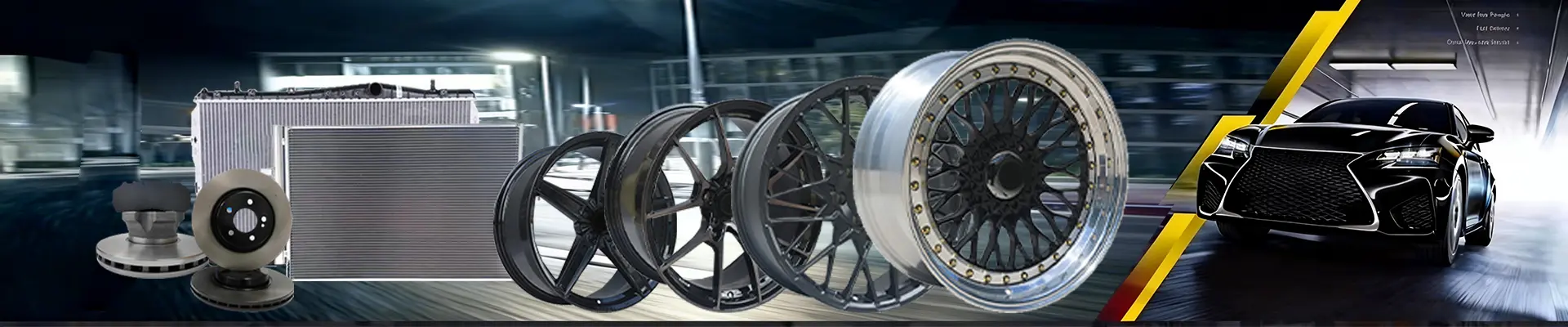
Alloy Wheel Rims 12″-24″ Factory Direct Supplier for Argentina OEM Bulk

Alloy Wheel Rims 12"-24" Factory Direct Supplier for Argentina OEM Bulk
Most importers assume cheap wheels mean cut corners. The real reason pricing drops is the elimination of middleman markups between the Jinan production floor and Buenos Aires warehouses.
Sourcing directly from a wheel rims supplier for Argentina allows buyers to slash per-unit costs substantially while maintaining VIA, TÜV, and DOT certification compliance. The catch: bolt patterns, offset values, and center bore dimensions must be calibrated precisely to Argentine vehicle specifications, or you will face returns that erase every dollar saved.
I spent years walking through modification shops in Mexico City and São Paulo, watching containers of wheels get opened only to sit unsold because a batch of 18-inch MAT finish rims had offset values that caused caliper interference. The return boxes piled up halfway across the warehouse. That kind of failure does not happen because the wheels are poorly made. It happens because the procurement team skipped the three-dimensional fitment check: bolt pattern, offset, and center bore. When I shifted from aftermarket installation work to managing OEM and bulk orders for the Latin American corridor, I started putting data tables in front of buyers before we ever discussed pricing. [NEED_CITE: root cause distribution of wheel fitment returns in Latin American aftermarket channels]
Let me walk you through what actually matters when you are evaluating a wheel rims supplier for Argentina, from the spec sheet to the customs desk.
Why Do Argentine Buyers Keep Getting Stuck on Wheel Fitment?
The majority of fitment failures trace back to a single oversight: treating bolt pattern as the only dimension that matters while ignoring offset tolerance and center bore clearance.
I have seen this play out repeatedly. A modification shop in Córdoba orders a container of 5×114.3 SUV wheels because that bolt pattern matches their local Toyota and Hyundai inventory. The wheels arrive, they look right, but when the technicians mount them, the inner barrel rubs against the brake caliper at full steering lock. The offset was too aggressive for the vehicle’s suspension geometry. The entire batch becomes scrap or requires expensive spacers that compromise handling.
Here is the three-dimensional fitment matrix that should govern every order placed with a wheel rims supplier for Argentina:
| Fitment Parameter | Argentine Passenger Cars | Argentine SUVs | Light Trucks | Verification Method |
|---|---|---|---|---|
| Bolt Pattern | 5×100 / 4×100 | 5×114.3 / 5×120 | 6×139.7 | Physical gauge check per batch |
| Offset Range | +35 to +45 | +30 to +45 | +15 to +25 | Caliper clearance simulation |
| Center Bore | 56.1mm / 54.1mm | 67.1mm / 106.1mm | 106.1mm / 108mm | Hub ring compatibility test |
| Load Rating | Standard passenger | Reinforced SUV spec | Light truck rated | TÜV load certification document |
[NEED_CITE: Argentine vehicle parc distribution by bolt pattern and center bore specification]
A wholesale buyer in Rosario once ordered a full container of staggered fitment wheels for a modified car shop. The front wheels were 18×8 with +35 offset. The rears were 18×9.5 with +38 offset. On paper, everything checked out. But when the shop tried to install the rears on a local Chevrolet variant, the +38 offset pushed the wheel barrel inward just enough to contact the ABS sensor bracket at compression. The shop had to machine down the bracket on every single car, adding labor cost that the buyer ended up absorbing.
The lesson is not complicated: offset tolerance of even a few millimeters can determine whether a wheel fits cleanly or requires fabrication workarounds. Any credible wheel rims supplier for Argentina should provide offset verification data before production begins, not after the container reaches the port.
What Certifications Does Argentine Customs Actually Require?
Argentine customs authorities verify VIA, TÜV, and DOT documentation at rates that catch the majority of shipments lacking proper paperwork. CCC certification serves as a supplementary credential but does not replace the primary international standards.
This is where many first-time importers learn an expensive lesson. They assume that because a wheel meets Chinese domestic standards, it will clear customs in Buenos Aires without additional documentation. The reality is that Argentina’s import verification regime treats structural integrity certifications as mandatory for wheel imports, and customs officers are trained to flag shipments where the paperwork does not match the physical product markings.
The certification hierarchy for a wheel rims supplier for Argentina serving the Argentine market looks like this:
- VIA (Vehicle Inspection Association): Required for alloy wheels entering most Latin American markets. Confirms structural testing including radial fatigue, impact resistance, and cornering fatigue per JWL-equivalent standards.
- TÜV (Technischer Überwachungsverein): German-origin certification widely accepted across Argentina. Covers material composition, load capacity, and dimensional accuracy.
- DOT (Department of Transportation): While US-origin, DOT certification is frequently requested by Argentine customs as a cross-reference for structural compliance.
- CCC (China Compulsory Certification): Demonstrates the manufacturer meets Chinese domestic quality standards. Useful as supporting documentation but not sufficient alone for Argentine clearance.
[NEED_CITE: Argentine customs AFIP documentation requirements for alloy wheel rim imports]
A buyer in Mendoza sourced wheels from a trading company that provided CCC certification and self-reported quality inspection documents. The shipment arrived at the port, customs flagged it for missing VIA or TÜV paperwork, and the container sat in bonded storage for weeks. The buyer eventually paid storage fees that exceeded the per-unit savings they had negotiated with the trader. The wheels were technically sound, but the paper trail was incomplete.
When you are working with a wheel rims supplier for Argentina, request copies of all certification documents before placing the order. Verify that the certification covers the specific wheel diameter, width, and bolt pattern you are ordering. A TÜV certificate for a 16-inch wheel does not automatically cover a 20-inch wheel from the same manufacturer.
Additionally, Argentine customs requires Spanish-language labeling on packaging and commercial invoices. The wheel rims supplier for Argentina should prepare these labels as part of the export documentation package, not as an afterthought when the container is already at the port.
How Does the Cost Structure Break Down from Jinan to Buenos Aires?
Factory-direct pricing from a wheel rims supplier for Argentina typically runs substantially below Japanese and European brand equivalents, but the total landed cost depends on ocean freight duration, container utilization, and customs clearance efficiency.
The pricing advantage of sourcing from a Jinan-based manufacturer is not a mystery. It comes from eliminating the trading company margin, the regional distributor markup, and the local importer’s overhead allocation. When you buy direct, the per-unit cost drops noticeably, sometimes by a range that transforms a marginal business into a profitable one.
But the factory price is only the starting point. Here is how the cost layers stack up for a typical shipment:
| Cost Component | Typical Duration | Optimization Strategy |
|---|---|---|
| Factory Production | 15 to 30 days | Consolidate orders to maximize container load |
| Inland Transport to Port | 2 to 4 days | Coordinate with manufacturer’s logistics team |
| Ocean Freight to Buenos Aires | Approximately 45 days | Book during off-peak shipping windows |
| Customs Clearance | 5 to 10 days | Pre-submit all certification documentation |
| Last-Mile to Warehouse | 1 to 3 days | Arrange local trucking before container arrival |
[NEED_CITE: typical ocean freight transit time from Chinese ports to Buenos Aires for containerized goods]
A wholesale buyer in Santiago, Chile, who also distributes into Argentina, learned to optimize container utilization the hard way. Their first order was a partial container load of mixed 17-inch and 19-inch wheels. The per-unit freight cost was high because the container was not full. Their second order consolidated all sizes into a single container, and the per-unit freight cost dropped substantially. The lesson: a wheel rims supplier for Argentina should help you calculate the optimal mix to fill a container, not just quote you a per-piece price.
Surface finish also affects cost. Machined face finishes are standard and carry the lowest production cost. Chrome plating adds a noticeable premium due to the multi-step electroplating process. Matte black and gunmetal finishes fall in the middle, with custom color matching adding cost depending on the complexity of the paint formulation.
What Should You Verify Before Choosing a Wheel Rims Supplier for Argentina?
Annual production capacity, multi-certification coverage, structural warranty terms, private mold capability, and documented Latin American export experience form the five non-negotiable criteria for supplier selection.
I have walked through factories that claim to produce millions of wheels annually but cannot produce a single TÜV certificate for the specific size you need. I have worked with trading companies that promise custom molds but actually subcontract to three different workshops, making batch consistency impossible. The gap between what a supplier says and what they can actually deliver is where importers get burned.
Here is the verification checklist I use when evaluating a wheel rims supplier for Argentina:
- Production Capacity: The manufacturer should demonstrate annual output in the millions of pieces, indicating established production lines and quality control infrastructure. A facility producing only tens of thousands of pieces annually cannot guarantee batch consistency for large orders.
- Certification Portfolio: Request current, valid certificates for VIA, TÜV, DOT, and CCC. Verify that the certificates cover the wheel sizes and specifications you intend to order. Expired certificates or certificates for different product lines are red flags.
- Structural Warranty: A credible wheel rims supplier for Argentina should offer a multi-year structural warranty covering material defects and manufacturing failures. This is not a marketing gesture. It is a commitment backed by the manufacturer’s confidence in their production process.
- Private Mold and ODM Capability: If you need custom designs, the manufacturer should have in-house engineering and mold-making capability. Outsourced mold production leads to longer lead times and inconsistent quality between batches.
- Latin American Export Track Record: The supplier should provide references or case studies from existing Argentine, Chilean, Brazilian, or Mexican buyers. Experience with Latin American customs documentation, Spanish-language labeling, and regional fitment specifications is not optional.
[NEED_CITE: supplier qualification criteria for automotive wheel rim importers in Latin America]
A modification shop owner in Buenos Aires told me about his experience switching from a trading company to a direct manufacturer. With the trader, lead times were unpredictable, batch color consistency was poor, and custom designs took months because the trader had to coordinate with multiple factories. After switching to a direct wheel rims supplier for Argentina with in-house mold capability, his custom order lead times dropped to a predictable range, and the color matching between batches became consistent. He no longer had to sort through wheels to find matching sets for his customers.
Conclusion
Direct sourcing from a wheel rims supplier for Argentina eliminates intermediary costs but demands rigorous attention to fitment specifications, certification documentation, and supplier capability verification.
The pricing advantage is real, but it only materializes into profit if the wheels fit the vehicles, clear customs without delay, and arrive in consistent condition. Bolt pattern, offset, and center bore must be validated before production begins. VIA, TÜV, and DOT certifications must be current and specific to the ordered sizes. And the supplier must demonstrate proven capacity, not just claims. Get the data right first, and the cost savings follow naturally.


