Summer 25% discount on all last year's bike models

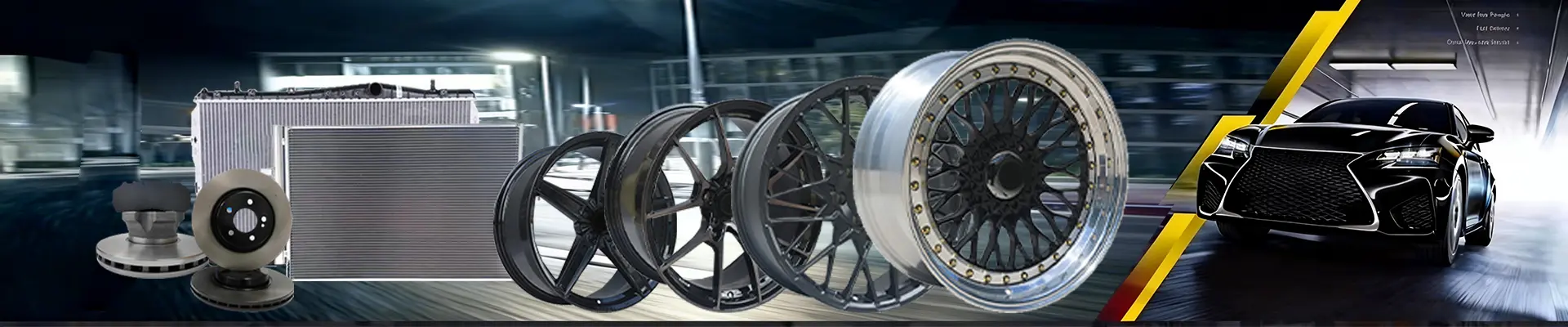
Wheel Rims Wholesale Supplier for Colombia: China Factory Direct

Wheel Rims Wholesale Supplier for Colombia: China Factory Direct
Most buyers assume Chinese wheels are cheap because of low labor costs. The real reason is a completely different manufacturing route—and that distinction determines whether your margin survives or your shipment gets rejected at Cartagena port.
When sourcing from a Wheel Rims Supplier Colombia importers trust, the answer is not simply "find the lowest quote." It is building a three-axis screening matrix: certification compliance matched to your target buyer segment, cost-structure transparency that explains the 40-60 percent gap versus Japanese brands, and MOQ flexibility calibrated to inventory turnover rather than unit price alone. Get these three right, and factory-direct sourcing works. Get any one wrong, and you are either leaving money on the table or holding dead stock.
I still remember a booth at Automechanika Frankfurt where a Colombian distributor walked up, pointed at a set of 20-inch matte-black flow-formed rims, and said, "Your Japanese competitor quoted me thirty percent less for the same look." I pulled up the spec sheet. The Japanese quote was Full Custom Paint with an extended salt-spray endurance class, while our quote was Machined Face with a standard clear coat. Two completely different process routes, two completely different cost structures, and the buyer had been comparing apples to tractor tires. That moment reinforced something I see across Latin America inquiries every week: the first question a serious Wheel Rims Supplier Colombia partner should ask is never "how many pieces?" It is "who is your end customer, and what standard are they comparing against?" [NEED_CITE: certification and process route alignment for Latin American aftermarket imports]
Let me walk you through how this actually works on the ground.
What Certifications Does Colombia Require for Imported Wheel Rims?
The short answer: there is no single mandatory national wheel certification in Colombia, but your target buyer segment dictates which international standard you must carry—or risk rejection, returns, or lost contracts.
Colombia’s import framework for automotive aftermarket parts does not impose a unique homologation stamp the way Brazil’s INMETRO or Argentina’s IRAM does. However, customs brokers in Barranquilla and Cartagena routinely request documentation proving the product meets the safety standard of its country of origin, and large retail chains or OEM-adjacent buyers will contractually require specific marks. The practical certification landscape breaks down like this:
| Certification | Primary Market | What It Tests | Colombia Relevance |
|---|---|---|---|
| DOT | United States | Structural impact, radial fatigue | Required if supplying US-bound cross-trade or American retail chains operating in Colombia |
| JWL / VIA | Japan | Cornering fatigue, radial fatigue, impact | Expected by buyers comparing against Japanese aftermarket brands |
| TÜV | Germany / EU | Full vehicle-level fitment and load | Needed for European-brand private-label programs |
| CCC | China | Domestic market access | Low relevance for Colombia unless dual-market factory |
| ISO 9001 / IATF 16949 | Global | Quality management system | Baseline expectation for any serious Wheel Rims Supplier Colombia deal |
A wholesale buyer stocking popular Toyota and Nissan fitments for tire shops in Bogotá needs JWL or VIA at minimum, because their customers will compare against Enkei or SSR pricing and expect equivalent documentation. An OEM-adjacent buyer supplying a regional assembly plant needs IATF 16949 plus batch-level traceability. An e-commerce seller shipping direct to Colombian enthusiasts via MercadoLibre can often operate with ISO 9001 alone, but one structural failure claim without proper certification documentation will sink the account. [NEED_CITE: Latin American import documentation requirements for aftermarket alloy wheels]
I once worked with a buyer in Barranquilla who insisted on "as many certifications as possible." We spent months stacking CCC, JWL, VIA, DOT, and TÜV on every SKU. The reality? His end customers—local改装 shops and small tire retailers—never asked for a single certificate. The certification cost was amortized into the unit price, and he lost a bid to a competitor who carried only JWL and ISO but priced fifteen percent lower. Certifications are not a trophy wall. They are a matching exercise.
Why Is China Factory-Direct Priced 40-60 Percent Below Japanese Brands?
The gap is real, but it is not a story about cheap labor. It is a story about process route selection, channel compression, and certification amortization.
When a Wheel Rims Supplier Colombia buyer compares a Chinese factory quote against a Japanese brand quote for what looks like the same wheel, the surface finish alone can create a thirty percent spread. Here is the cost-structure anatomy:
| Cost Component | Japanese Brand Route | China Factory-Direct Route |
|---|---|---|
| Raw Material (A356 alloy) | Comparable | Comparable |
| Casting / Flow-Forming | Comparable | Comparable |
| Surface Treatment | Full Custom Paint, multi-layer, extended salt-spray endurance | Machined Face + standard clear, or Full Custom Paint at buyer’s option |
| Certification Amortization | JWL + VIA + proprietary brand QA overhead | JWL + VIA + ISO, no brand royalty layer |
| Distribution Channel | Brand → regional master distributor → local wholesaler → retailer | Factory → wholesaler or retailer directly |
| Margin Structure | Cumulative channel markups across three to four entities | Single factory margin |
The surface treatment line deserves special attention. A Machined Face finish involves CNC-cutting the front face after painting, leaving a bright metallic contrast. It is visually striking and process-efficient. A Full Custom Paint finish requires complete color layering across the entire wheel, often with a powder-coat base, color coat, and clear coat, each cured separately. The salt-spray endurance class for Full Custom Paint typically runs substantially higher, and the material and energy cost per piece is noticeably greater. When the Colombian buyer in my Frankfurt story compared our Machined Face quote to a Japanese Full Custom Paint quote, he was not comparing the same product. He was comparing two different manufacturing philosophies. [NEED_CITE: surface treatment cost structure comparison in alloy wheel manufacturing]
Channel compression is the other half. A Japanese brand wheel reaching a Colombian retailer has typically passed through a Japan-based exporter, a Miami or Panama regional hub, a Colombian national distributor, and finally the local wholesaler. Each layer adds margin, logistics handling, and inventory carrying cost. A direct factory relationship collapses this to one transaction. The 40-60 percent gap is not a discount. It is the elimination of structural cost that the buyer never needed to pay in the first place.
How Do You Verify Whether a Factory Quote Is Actually Reasonable?
Do not accept a lump-sum unit price. Ask for a cost-structure breakdown, and compare it against the process standard you have specified.
A legitimate Wheel Rims Supplier Colombia partners work with will provide a transparent cost decomposition when asked. If they refuse, that is your first red flag. The breakdown should separate raw material, surface treatment, certification amortization, packaging, and factory margin. You do not need to audit their accounting. You need to see whether the surface treatment line matches the finish you requested, and whether the certification line matches the market you are selling into.
Here is a practical verification workflow:
- Specify the exact finish and standard. Write "Machined Face, JWL-certified, 17×7.5, 5×114.3, ET45" rather than "same as this picture." Ambiguity invites incomparable quotes.
- Request the cost breakdown. A reasonable supplier will separate alloy cost, machining, painting, certification allocation, and packing. If they cannot, they may be trading rather than manufacturing.
- Cross-check the surface treatment line. If the quote says Full Custom Paint but the unit price is close to a Machined Face quote from another supplier, someone is mislabeling the process.
- Validate certification claims independently. Ask for the certificate number and verify it against the issuing body’s database. Self-reported compliance without verifiable documentation is worthless. [NEED_CITE: independent verification methods for wheel rim certification claims]
- Request a pre-production sample with full process documentation. The sample should carry the same finish, same certification mark, and same packaging spec as the production order.
A buyer in Bogotá once showed me two quotes for identical 15-inch steel-look alloy wheels for Toyota and Nissan fitments—one from a trading company, one from a factory. The trading company’s quote was eight percent lower. When I asked the trading company for a cost breakdown, they could not provide one. When I asked the factory, they walked me through every line. The trading company was buying from a smaller, uncertified workshop and relabeling. The Bogotá buyer switched to the factory, paid slightly more per piece, and avoided a batch-consistency disaster that would have cost him his retail contracts.
How Do MOQ and Lead Time Affect Your Inventory Risk?
The lowest MOQ is not always the best MOQ. The right MOQ is the one that balances your inventory turnover rate against your capital占用 cost.
For a Wheel Rims Supplier Colombia buyers work with, the critical question is not "can you do one piece?" It is "what is the minimum batch size that keeps my Bogotá warehouse turning inventory every thirty to forty-five days without tying up six months of working capital?"
The practical range for most Colombian wholesale and retail buyers looks like this:
| Order Type | Typical MOQ | Lead Time | Best Suited For |
|---|---|---|---|
| Stock models (popular fitments) | Noticeably low threshold, suitable for trial orders | Noticeably short production cycle | Tire shops, retail stores, fast-turnover best-sellers |
| Custom finish or size | Moderate threshold | Standard production cycle | Modification shops, private-label programs |
| Full OEM batch | Substantially higher threshold | Extended production and QA cycle | OEM supply, large-scale fleet programs |
A modification shop in Medellín specializing in deep-concave and staggered fitments does not need five hundred pieces of one SKU. They need twenty to fifty pieces, rotated across multiple styles, refreshed every few months as trends shift. A tire shop chain restocking 15-17 inch fitments for Toyota, Nissan, and Chevrolet needs a reliable pipeline with short replenishment cycles, not a warehouse full of slow-moving inventory. [NEED_CITE: inventory turnover optimization for Latin American wheel aftermarket buyers]
The lead time equation matters just as much. Ocean freight from a Chinese port to Cartagena or Barranquilla typically runs several weeks. If your supplier’s production lead time is short, you can order closer to actual demand, reducing the forecast error that leaves you with dead stock. If the lead time is long, you must order further ahead, locking in capital and increasing the risk of style or fitment obsolescence.
I have seen buyers insist on the absolute lowest MOQ, only to discover that the supplier’s production scheduling meant their small order was pushed behind larger commitments, extending the actual delivery window by weeks. The unit price looked great. The inventory reality did not.
Factory Direct vs. Trading Company: Which Should a Colombian Buyer Choose?
If your annual volume crosses roughly two container loads, go direct. Below that threshold, a good trading company may actually serve you better—provided you understand what you are trading away.
A Wheel Rims Supplier Colombia buyers choose as a factory-direct partner offers three structural advantages a trading company cannot match: custom engineering access, batch-level consistency control, and the full margin benefit of channel compression. A trading company offers one thing a factory cannot: the ability to aggregate small orders across multiple factories and styles into a single mixed container, with lower per-SKU commitment.
| Decision Factor | Factory Direct | Trading Company |
|---|---|---|
| Custom engineering and OEM support | Full access | Limited or none |
| Batch consistency across large runs | Verifiable, controlled | Variable, depends on subcontractor |
| Unit price at volume | Substantially lower | Includes trading margin |
| MOQ flexibility per SKU | Moderate | Noticeably higher flexibility |
| Mixed-container capability | Limited | Noticeably stronger |
| Certification documentation | Directly issued, verifiable | Re-labeled, requires independent verification |
For a wholesale distributor in Cali moving multiple container loads per year across popular fitments, the factory-direct route is the only rational choice. The per-piece savings compound, the certification chain is clean, and the engineering support for private-label programs is available. For a small modification shop ordering a few dozen pieces across five different styles, a trading company’s aggregation capability may be more practical—until the shop grows to the point where the trading margin becomes a significant drag on competitiveness.
The transition point varies by buyer, but the principle is constant: understand what you are paying for, and make sure the structure matches your actual business stage.
Conclusion
Sourcing wheel rims from China for the Colombian market is a structural decision, not a price-shopping exercise. Match your certification to your buyer segment, not to a wish list. Understand the process route behind every quote, and verify cost transparency before committing. Balance MOQ against inventory turnover, not against unit price alone. And choose your channel—factory direct or trading partner—based on your actual volume and customization needs, not on the illusion that one is always better than the other. Get these four alignments right, and the 40-60 percent cost advantage becomes real, sustainable margin.


