Summer 25% discount on all last year's bike models

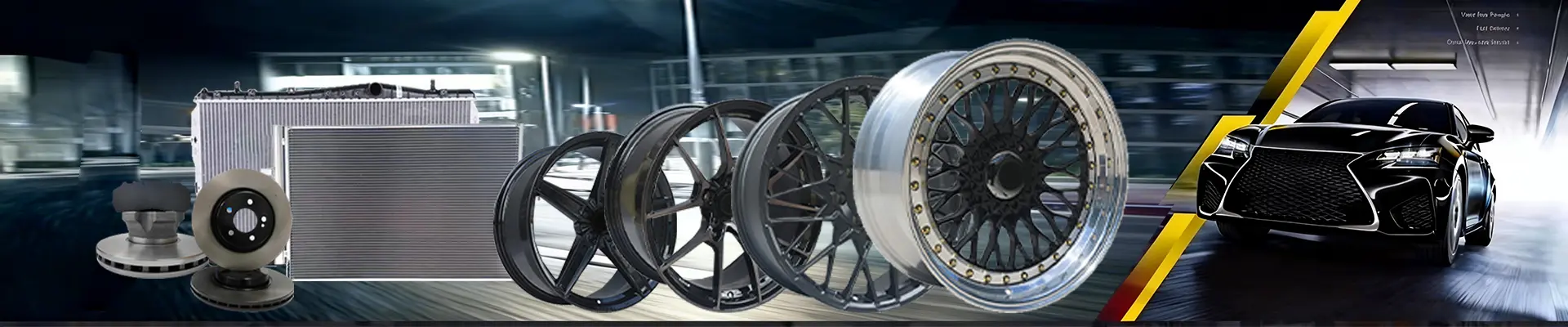
Sports Car Wheels Wholesale: Bulk Order from China Manufacturer

Sports Car Wheels Wholesale: Bulk Order from China Manufacturer
Lowest unit price rarely means lowest total cost. Hidden expenses from failed port inspections, aftermarket returns, and shipping damage routinely eclipse the per-piece savings of uncertified wheels.
When sourcing sports car wheels wholesale, certification compliance, container loading efficiency, and pre-shipment quality control determine real profit margins far more than the quoted factory price.
I still remember a container of 20-inch matte black forged wheels destined for a modification shop in Riyadh. The buyer had chased the lowest quote from a workshop without proper certification. When the shipment reached Dammam port, customs抽检 flagged three rims for excessive radial runout. The entire container was impounded. The demurrage and storage fees ended up costing more than the wheels themselves. That container sat on the dock for weeks while the buyer scrambled to find a replacement supplier. [NEED_CITE: port demurrage cost impact on wheel import profitability]
Since then, I have watched the same pattern repeat across dozens of bulk orders. Buyers fixate on the per-piece price, then get blindsided by compliance gaps, packaging failures, or batch inconsistencies. The math never works out in their favor.
Let me walk you through the factors that actually decide whether a sports car wheels wholesale order makes money or bleeds it.
Why Should You Never Judge a Wheel Supplier by Unit Price Alone?
The sticker price on a wheel is only the visible layer of your total landed cost. Certification fees, port detention charges, warranty claims, and repackaging expenses sit beneath the surface, and they scale with order volume.
Consider a Middle East tuning shop that ordered a full container of flow-formed wheels. The factory quoted a price noticeably below market average. What the buyer did not account for: the wheels lacked JWL marking, which Saudi customs now cross-references against import databases. The shipment was held for manual inspection. By the time paperwork was sorted, the storage fees had eaten through the margin the buyer thought they had secured. [NEED_CITE: GCC import certification requirements for alloy wheels]
Then there is the South American distributor who chose cast wheels over forged to hit a price point. The wheels looked fine at the factory. But once mounted on performance sedans, end users reported vibration issues at highway speeds. The root cause was inconsistent dynamic balance tolerances across the batch. The distributor ended up processing returns on a significant portion of the order, and the reverse logistics cost several times what they had saved on unit price.
| Cost Factor | Certified Supplier | Uncertified Low-Cost Supplier |
|---|---|---|
| Port clearance risk | Minimal | High |
| Batch consistency | Verifiable | Uncontrolled |
| Return rate | Noticeably reduced | Substantially elevated |
| Warranty claims | Controlled | Frequent |
| Total landed cost predictability | High | Vulnerable |
The pattern is consistent: buyers who optimize purely for unit price end up paying through the nose elsewhere. [NEED_CITE: total cost of ownership analysis in automotive aftermarket parts procurement]
How Do You Match Wheel Certifications to Your Target Market?
Certification is not a universal badge; it is a market-specific passport. Each major import region has its own regulatory framework, and shipping wheels without the correct markings is the fastest way to get a container stuck at the border.
The certification landscape for alloy wheels breaks down into several key systems. VIA and JWL are the Japanese standards, widely recognized across Asia and often required for entries into markets that reference Japanese industrial norms. TÜV certification covers the European economic area and carries heavy weight with customs authorities in Germany, Italy, and the broader EU. DOT compliance is non-negotiable for any shipment entering the United States. CCC is mandatory for wheels destined for the Chinese domestic market. [NEED_CITE: international alloy wheel certification standards comparison by region]
Here is how these certifications map to real procurement scenarios:
| Certification | Primary Market Coverage | Typical Buyer Profile |
|---|---|---|
| VIA / JWL | Japan, Southeast Asia, Middle East | Tuning shops, aftermarket distributors |
| TÜV | European Union, UK | Premium aftermarket, OEM-adjacent buyers |
| DOT | United States, Canada | Mass-market distributors, e-commerce sellers |
| CCC | China domestic | OEM manufacturers, local retailers |
| ISO 9001 | Global baseline | All wholesale buyers |
A distributor in Brazil once received a batch of wheels stamped only with a factory-internal code. Brazilian customs requires either INMETRO certification or verifiable TÜV documentation for alloy wheel imports. The wheels were rejected at the port of Santos. The buyer had to arrange re-export at their own expense. [NEED_CITE: Brazil INMETRO alloy wheel import regulations]
The practical takeaway is straightforward: before you place a sports car wheels wholesale order, confirm that the factory holds the specific certification your destination country requires. Do not assume that a general quality management certificate covers regulatory compliance. They are entirely different things.
Some manufacturers maintain multi-certification portfolios covering VIA, TÜV, DOT, JWL, and CCC simultaneously. This eliminates the need to source from different factories for different markets and ensures documentation is ready when customs asks for it.
Forged vs Cast: How Should Bulk Buyers Choose the Right Manufacturing Process?
The forging versus casting decision is not about which process is superior; it is about which process matches your end-user expectations and price positioning.
Cast wheels are produced by pouring molten aluminum alloy into a mold. The process is efficient, scalable, and cost-effective. Gravity casting and low-pressure casting are the two main variants, with low-pressure casting delivering denser material structure and better mechanical properties. Cast wheels dominate the OEM replacement segment and the volume end of the aftermarket because they offer acceptable strength at accessible price points. [NEED_CITE: metallurgical differences between cast and forged aluminum alloy wheels]
Forged wheels start from a solid billet of aluminum alloy that is subjected to extreme pressure, typically in the range of several thousand tons, to form the wheel shape. This compresses the grain structure of the metal, resulting in significantly higher strength-to-weight ratios. Forged wheels are the standard choice for high-end modification shops, track-day enthusiasts, and luxury vehicle owners who prioritize unsprung weight reduction.
| Attribute | Cast Wheels | Forged Wheels |
|---|---|---|
| Material density | Standard | Substantially higher |
| Weight | Heavier at equivalent strength | Noticeably lighter |
| Production cost | Lower | Higher |
| MOQ flexibility | High | Moderate |
| End-user positioning | Volume aftermarket, OEM replacement | Premium modification, performance |
| Custom design flexibility | Moderate | High |
A Southeast Asian e-commerce seller once ordered a mixed batch of cast and forged wheels to test market response. The cast wheels moved quickly at competitive price points, but the forged wheels generated higher per-unit margins and fewer fitment complaints. The seller eventually shifted the product mix toward forged wheels for the performance segment while keeping cast wheels for the budget tier.
The key insight for sports car wheels wholesale buyers is this: do not default to forged simply because it sounds premium, and do not default to cast simply because it is cheaper. Map your customer base first. If your buyers are daily drivers looking for style upgrades, cast wheels at the right specification deliver the job. If your buyers are enthusiasts who track their cars or demand aggressive concave profiles, forged is the only viable option.
How Can You Optimize Container Loading and Packaging to Reduce Per-Unit Freight Cost?
Freight cost per wheel is determined not just by shipping rates but by how many wheels you can fit into a container without damage. Loading efficiency and packaging design are where logistics knowledge translates directly into margin.
A standard 20-foot container can hold a specific number of wheels depending on diameter, width, and stacking configuration. The difference between a poorly planned load and an optimized one can be substantial. For example, 20-inch wheels and 22-inch wheels have very different volumetric footprints. A container loaded with 20-inch wheels will carry noticeably more units than one loaded with 22-inch wheels of comparable width. [NEED_CITE: standard container loading capacity calculations for alloy wheels by diameter]
Packaging design matters just as much. Wheels shipped loose or with minimal protection will arrive with curb rash, paint chips, or bent lips. The cost of repackaging or discounting damaged units at the destination wipes out any freight savings from overstuffing the container.
Here is a practical framework for packaging decisions:
| Packaging Element | Budget Approach | Export-Grade Approach |
|---|---|---|
| Individual wheel protection | Basic cardboard sleeve | Foam-molded cradle with corner guards |
| Stacking method | Direct contact | Separated by protective dividers |
| Pallet vs floor-loaded | Pallet (fewer units per container) | Floor-loaded (maximized volume) |
| Moisture protection | None | Silica gel packets plus shrink wrap |
| Damage rate at destination | Noticeably higher | Noticeably reduced |
An e-commerce seller in Australia received a batch of wheels where the factory had used thin cardboard dividers instead of foam cradles. Despite the container being properly sealed, ocean humidity and container flex during transit caused the wheels to shift. Several units arrived with lip damage. The seller had to process warranty replacements, and the claim cycle stretched across weeks. [NEED_CITE: alloy wheel packaging standards for ocean freight export]
Experienced factories design packaging around the destination market. Wheels bound for Amazon FBA warehouses need packaging that meets specific drop-test and dimensional requirements. Wheels going to a tuning shop that will mount them immediately can use simpler packaging. The factory should ask about your end-use scenario before finalizing the packaging spec.
When negotiating a sports car wheels wholesale order, request a container loading plan from the supplier before production begins. A competent factory will provide a loading diagram showing how many wheels of each diameter fit into a 20-foot and 40-foot container, along with the recommended stacking pattern.
What Quality Inspection Checkpoints Prevent Port Rejection and End-User Complaints?
Pre-shipment inspection is not an optional courtesy; it is the last line of defense against financial loss. Once a container leaves the factory, fixing defects at the destination is exponentially more expensive than catching them before loading.
The critical inspection points for alloy wheels fall into three categories: structural integrity, dimensional accuracy, and surface quality.
Structural integrity is verified through X-ray inspection, which detects internal porosity, shrinkage cavities, and incomplete fusion in the aluminum. This is especially critical for cast wheels, where internal defects are invisible to the naked eye. Forged wheels, due to their compressed grain structure, have lower porosity risk but still benefit from spot X-ray checks on new designs. [NEED_CITE: X-ray inspection standards for cast aluminum alloy wheels]
Dimensional accuracy covers three parameters that directly affect fitment and driving safety: radial runout, lateral runout, and dynamic balance. Radial runout measures how much the wheel deviates from a perfect circle as it rotates. Excessive radial runout causes steering wheel vibration at speed. Lateral runout measures side-to-side wobble. Dynamic balance ensures the wheel rotates evenly without causing resonance.
| Inspection Parameter | Acceptable Standard | Consequence of Exceeding Standard |
|---|---|---|
| Radial runout | Within specified tolerance | Steering vibration, uneven tire wear |
| Lateral runout | Within specified tolerance | Handling instability |
| Dynamic balance | Within specified tolerance | High-speed vibration, component fatigue |
| X-ray porosity | No critical internal defects | Structural failure risk under load |
| Surface coating adhesion | Passes cross-cut test | Premature corrosion, paint peeling |
A Latin American distributor received a batch of wheels that looked perfect visually. But when the wheels were mounted on vehicles, a significant portion caused vibration complaints. Post-shipment testing revealed that the dynamic balance tolerances had not been checked on a per-wheel basis at the factory. The distributor had to arrange third-party balancing at the destination, a cost that ran into the thousands. [NEED_CITE: dynamic balance tolerance standards for aftermarket alloy wheels]
The most reliable approach is to engage a third-party inspection service to conduct a pre-shipment audit. The inspector should verify dimensional parameters on a statistically significant sample from the batch, check surface finish quality, and review the factory’s X-ray records. Some buyers also request that the factory perform 100 percent dynamic balance testing rather than spot-checking, especially for orders destined for markets where end-users are performance-sensitive.
Factories that maintain in-house testing laboratories and offer structural warranties on their wheels demonstrate confidence in their quality systems. A multi-year structural warranty signals that the manufacturer stands behind the product beyond the point of sale.
Conclusion
Certification, loading efficiency, and inspection discipline are the three pillars that determine whether a sports car wheels wholesale order generates profit or loss. Unit price matters, but it is the smallest variable in the total cost equation. Match your certification to your destination market, choose the manufacturing process based on your customer profile, optimize packaging for the logistics chain, and never skip pre-shipment inspection. The factories that excel across all four dimensions are the ones that build long-term partnerships with serious buyers.


