Summer 25% discount on all last year's bike models

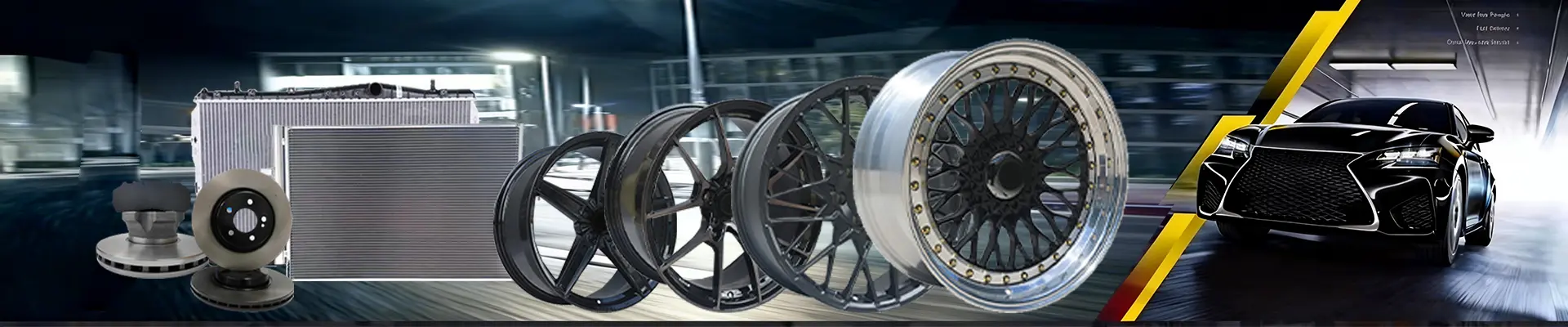
Racing Alloy Wheels 12″-24″ OEM Manufacturer for Sale

Racing Alloy Wheels 12"-24" OEM Manufacturer for Sale
Most buyers assume forged wheels are lighter because the material itself is lighter — they are not. The density of aerospace-grade aluminum alloy remains identical regardless of forming method. What forging actually changes is the allowable cross-sectional thickness of the spoke, which is where the weight savings originate.
Selecting the right Best Alloy Wheels for Racing requires matching three variables simultaneously: construction method (cast, flow-formed, or forged), precise fitment parameters (diameter, width, offset, center bore, bolt pattern), and certified testing standards (JWL, VIA, TÜV, DOT/SAE) — aligned to the vehicle’s brake clearance, suspension travel, and intended use case. Brand aesthetics come last.
I spent years on the production floor before transitioning to trade shows — Frankfurt Automechanika, Las Vegas SEMA, Chicago AAPEX — walking booth after booth, handling wheels, reading stamp marks, arguing about offset tolerances. Early on, a US-based tuning shop ordered a batch of 20-inch forged wheels for a wide-body GT-R build. We shipped with a conventional offset value commonly used on that diameter. The wheels rubbed the fenders at full compression. The entire order came back, and the return freight alone exceeded the cargo value. Since then, I treat every fitment conversation like a calibration exercise: what car, what brakes, what suspension travel, what surface finish. When sourcing Best Alloy Wheels for Racing from an OEM manufacturer, that level of parameter-level dialogue separates a viable supply partner from a catalogue browser.
Before diving into construction methods, it helps to understand why the selection framework matters at all. Track-day organizers across Europe and Japan routinely inspect wheel certification stamps before allowing cars onto the circuit [NEED_CITE: JWL and VIA certification requirements for motorsport event eligibility in Japan and Europe]. A wheel that looks correct but lacks the proper stamp will be turned away — regardless of price or brand. This reality shapes how distributors, tuning shops, and e-commerce sellers should evaluate their supply chain.
What Construction Method Suits Your Racing Application?
Forged wheels deliver the highest strength-to-weight ratio for dedicated track use; flow-formed wheels balance cost and performance for street-modified applications; gravity or low-pressure cast wheels suit show-only builds where structural loads remain minimal.
The manufacturing process determines how aluminum alloy molecules align under load. In gravity casting, molten alloy is poured into a steel mold and solidifies under atmospheric pressure. The resulting grain structure is relatively coarse, which limits how thin the spoke sections can be machined without compromising fatigue life. Low-pressure casting improves density slightly by pushing the melt upward into the mold under controlled pressure, but the fundamental grain orientation remains random [NEED_CITE: metallographic grain structure comparison between gravity cast and low-pressure cast aluminum alloy wheels].
Flow-forming (also called rotary forging or spin-forming) starts with a cast center section, then uses hardened rollers to stretch and thin the rim barrel under simultaneous heat and pressure. This process elongates the grain flow along the circumference of the barrel, producing a rim section with tensile characteristics approaching those of a forging — at a fraction of the equipment cost.
True multi-axis forging compresses a heated billet under thousands of tons of pressure, then machines the final profile. The grain flow follows the spoke geometry, creating a continuous load path from hub mounting surface to rim edge. This is why forged Best Alloy Wheels for Racing can achieve spoke sections noticeably thinner than cast equivalents while passing the same impact and fatigue protocols.
| Parameter | Gravity Cast | Flow-Formed | Multi-Axis Forged |
|---|---|---|---|
| Grain Flow Orientation | Random | Circumferential (barrel) | Contoured to spoke geometry |
| Minimum Achievable Spoke Thickness | Substantially thicker | Noticeably reduced | Thinnest achievable |
| Weight at Equivalent Diameter | Heaviest tier | Mid-tier | Lightest tier |
| Suitability for Sustained Track Use | Not recommended | Suitable for occasional track | Suitable for sustained track |
| Typical Price Tier | Entry | Mid-range | Premium |
| Lead Time from Order to Shipment | Shortest | Moderate | Longest |
A Middle East distributor once stocked a large volume of low-pressure cast wheels at an attractive unit price, intending to market them for track-day use. Within one season, multiple end-users reported hairline cracks near the spoke-root junction after repeated heat cycling. The wheels had not failed any static load test — but the random grain structure of the cast process could not withstand the repeated lateral冲击 of curb strikes at speed. The distributor replaced the entire inventory with flow-formed equivalents and never returned to cast for any performance SKU.
For buyers assembling a product matrix, the rule of thumb is straightforward: if the end-user will subject the wheel to sustained lateral loads above a moderate threshold — circuit driving, rally stages, aggressive canyon use — flow-formed is the minimum acceptable construction. Forged becomes the correct choice when unsprung weight reduction directly affects lap times or when brake caliper envelopes are large enough that spoke clearance becomes critical.
How Do You Read Racing Wheel Sizing and Fitment?
Diameter, width, offset (ET), center bore, and bolt pattern must all be verified against the specific vehicle’s brake caliper outer diameter, suspension compression travel, and fender inner contour — not against the stock wheel size alone.
A common mistake among first-time buyers is to select a Best Alloy Wheels for Racing based solely on diameter and bolt pattern, then discover during assembly that the caliper clears the barrel but the spoke inner profile contacts the caliper piston housing. This happens because spoke design varies even within the same diameter and width — a deep-concave multi-spoke pattern may have less inner clearance than a flat-face six-spoke of identical outer dimensions.
Offset (ET, measured in millimeters) defines how far the wheel’s mounting plane sits from its centerline. A lower (or more negative) offset pushes the wheel outward, widening the track — but also increases the lever arm on the hub bearing, accelerating wear if the vehicle’s suspension geometry was not designed for it. A higher offset tucks the wheel inward, which can cause the inner barrel or suspension component to contact the strut body or fender liner at full compression [NEED_CITE: relationship between wheel offset and hub bearing load distribution per SAE technical papers].
Width (J-value) interacts with offset to determine the inner and outer edge positions. A wider wheel at the same offset extends both inward and outward equally. If the fender lip cannot accommodate the outward extension, the wheel will rub under steering lock or body roll. If the inner edge extends too far inward, it may contact the strut or brake line bracket.
Center bore must match the vehicle’s hub pilot diameter exactly. A mismatch — even a small one — forces the use of hub-centric rings, which introduce a secondary load path. Under sustained track loading, ring slippage or fracture can cause vibration that escalates into structural fatigue. Common hub diameters vary significantly across manufacturers, and a single SKU cannot cover all applications without ring sets.
| Fitment Parameter | What It Controls | Risk if Incorrect |
|---|---|---|
| Diameter | Brake caliper outer clearance | Caliper contact, impossible mounting |
| Width (J-value) | Tire bead seating and inner/outer edge position | Fender rub, strut contact, poor tire bead seal |
| Offset (ET) | Wheel lateral position relative to hub | Hub bearing overload, fender or strut interference |
| Center Bore | Hub-centric load transfer | Vibration, ring slippage, uneven bolt load |
| Bolt Pattern | Lug alignment and clamp load distribution | Impossible mounting, cross-threading, lug failure |
A European tuning shop once received a container of 19-inch wheels for a popular German sedan platform. The bolt pattern and center bore were correct. But the offset was set for a North American variant with a different factory brake package. On the European-spec cars with larger calipers, the spoke inner profile contacted the caliper at roughly three o’clock. The shop had to machine the spoke inner edges — voiding any structural certification — before the wheels could be mounted. The cost of that rework, combined with customer goodwill credits, erased the margin on the entire order.
When ordering Best Alloy Wheels for Racing from an OEM source, always provide the complete vehicle specification — including brake package variant and any suspension modification — rather than relying on generic year-make-model fitment lists. A responsible manufacturer will request this data before releasing a production order.
Which Certifications Prove a Racing Wheel Is Track-Safe?
JWL and VIA certify wheels for the Japanese market through defined impact and fatigue protocols; TÜV certifies for European road and track use under stricter documentation requirements; DOT and SAE frameworks govern the US market — each requiring specific test sequences that cannot be substituted for one another.
Certification is not a marketing label — it is a documented test sequence performed on sample wheels from each design and size combination. The JWL standard, administered by the Japanese Ministry of Land, Infrastructure, Transport and Tourism, requires a dynamic radial fatigue test and a 13-degree impact test simulating curb strike [NEED_CITE: JWL testing protocol specifications for passenger vehicle alloy wheels including impact energy and fatigue cycle requirements]. The VIA mark indicates that the wheel was inspected by a third-party organization accredited by the Japanese government, confirming that the manufacturing facility’s output consistently meets JWL thresholds.
TÜV certification (Germany) goes further: it requires not only that the wheel pass structural tests, but also that the manufacturer maintain a documented quality management system, provide material traceability for each production batch, and submit to periodic unannounced factory audits. For European buyers selling into markets where track-day organizers inspect wheel stamps, TÜV is often the minimum acceptable credential.
In the US market, the DOT framework addresses tire-wheel assembly integrity, while SAE technical papers provide engineering guidance on load rating and fatigue methodology. Many US-based track-day series accept JWL or TÜV as equivalent proof of structural adequacy, but buyers should verify the specific series rules before committing inventory.
| Certification | Primary Market | Key Test Requirements | Third-Party Verification |
|---|---|---|---|
| JWL | Japan | Radial fatigue, 13° impact | Self-declared by manufacturer |
| VIA | Japan | Same as JWL plus factory audit | Accredited third-party inspector |
| TÜV | Europe | Structural tests plus QMS audit and batch traceability | TÜV-accredited body, unannounced audits |
| DOT / SAE | US | Tire-wheel assembly integrity, engineering guidance | Varies by specific standard |
A South American distributor once sourced wheels from a factory that claimed JWL compliance but could not produce test reports referencing specific wheel sizes. The stamps were present on the wheels, but when the distributor’s largest customer — a circuit racing team — requested the test documentation for their specific 18-inch SKU, the factory could only provide a generic certificate covering a different size. The racing team refused to mount the wheels, and the distributor absorbed a full container of unsellable inventory.
When vetting Best Alloy Wheels for Racing suppliers, request the actual test report — not a certificate template — and confirm that the report references the exact diameter, width, and offset combination you intend to order. A legitimate manufacturer will have test data organized by SKU and will provide it without hesitation.
Cast vs Flow-Formed vs Forged: Which Delivers the Best Value?
Value is not determined by unit price alone — it is determined by the ratio of structural performance to end-use requirement. A cast wheel is the best value for a show car that never sees a curb; a forged wheel is the best value for a dedicated race car where every gram of unsprung mass affects lap time; flow-formed occupies the broad middle where most street-modified and occasional-track buyers operate.
The comparison matrix below summarizes how the three construction methods differ across the parameters that matter most to buyers assembling inventory for performance applications.
| Evaluation Dimension | Gravity / Low-Pressure Cast | Flow-Formed | Multi-Axis Forged |
|---|---|---|---|
| Weight at Equivalent Size | Heaviest | Noticeably lighter | Lightest |
| Load Rating Capacity | Adequate for street | Substantially higher than cast | Highest achievable |
| Resistance to Impact Fatigue | Vulnerable to repeated lateral shock | Resistant under moderate repetition | Robust under sustained repetition |
| Price Tier (Relative) | Entry | Mid-range | Premium |
| Minimum Order Flexibility | High (many stock sizes) | Moderate | Lower (often made-to-order) |
| Typical Lead Time | Shortest | Moderate | Longest |
| Ideal End-Use Scenario | Show, static display, light street | Street-modified, occasional track | Dedicated track, rally, time attack |
A North American e-commerce seller once listed a range of cast wheels under racing-style product titles, targeting buyers searching for Best Alloy Wheels for Racing. The unit cost was low, the photography looked aggressive, and the initial sales velocity was strong. Within weeks, returns began arriving — not because the wheels were defective in manufacturing, but because end-users mounted them on cars that exceeded the structural intent of the cast process. Curb strikes at circuit events produced spoke-root cracks that would not have occurred on flow-formed or forged equivalents. The return rate climbed until the seller replaced the entire cast SKU range with flow-formed, absorbing the margin compression as the cost of aligning product capability with customer expectation.
The lesson for buyers is that value optimization requires matching construction method to the most demanding use case the end-user will subject the wheel to — not the average use case. A single curb strike at track speed generates an impact energy that a cast spoke may not survive, even if that wheel spends most of its life parked at a cars-and-coffee event.
How Should Buyers Vet an OEM Racing Wheel Supplier?
A credible OEM partner will provide verifiable test reports organized by SKU, maintain clear mold ownership terms, accommodate reasonable minimum order quantities for custom designs, and demonstrate consistent surface finish quality across production batches — not just across display samples.
The first document to request is the test report for the specific size and offset combination you intend to order. A generic certificate covering a different diameter or width is not sufficient — the test protocol results vary with wheel geometry, and a report for a 17-inch wheel does not validate a 19-inch wheel of the same design.
Mold ownership terms deserve explicit written agreement. Some manufacturers retain mold ownership and restrict the buyer from transferring production to another facility. Others sell the mold outright, allowing the buyer to qualify a backup source. For buyers building a private-label program around a proprietary design, mold ownership determines long-term supply chain flexibility.
Surface finish consistency is a frequently overlooked variable. A display sample may show flawless machined-face finish, but batch-to-batch variation in coating thickness, color matching, or clear-coat adhesion can trigger customer complaints months after delivery. Request production samples from at least three separate batches — not consecutive samples from the same run — and evaluate them under consistent lighting conditions [NEED_CITE: surface coating adhesion and salt-spray endurance testing protocols for automotive alloy wheels].
| Supplier Evaluation Criterion | What to Request | Red Flag |
|---|---|---|
| Structural Test Documentation | Test report for exact SKU ordered | Generic certificate covering different size |
| Mold Ownership Terms | Written agreement specifying ownership and transfer rights | Verbal assurance only, no written terms |
| Minimum Order Flexibility | Written MOQ policy for stock and custom designs | Unwillingness to discuss MOQ for initial trial order |
| Batch Finish Consistency | Production samples from multiple non-consecutive batches | Only display samples available, no batch samples |
| Certification Scope | Certification covering all sizes and offsets in your order | Certification limited to select sizes |
A Southeast Asian distributor once qualified a new supplier based on an attractive sample set and a competitive price list. The first production order arrived with surface finish that matched the sample. The second order, placed six months later, showed noticeable color variation on the gunmetal finish and reduced clear-coat adhesion on the machined faces. The supplier had changed its coating subcontractor without notification. Because the distributor had not requested batch samples from multiple production runs during qualification, the variation was not caught until the wheels reached end-user installation.
When evaluating an OEM manufacturer for Best Alloy Wheels for Racing, treat the qualification process as a multi-batch, multi-document exercise — not a single-sample, single-certificate review. A supplier confident in its process will welcome this scrutiny; a supplier operating with inconsistent inputs will deflect or delay.
Conclusion
Racing wheel selection is a parameter-matching exercise, not a brand-selection exercise. Construction method must align with the structural demands of the intended use case. Fitment dimensions must clear brake components and suspension travel at full compression. Certification stamps must correspond to the specific SKU ordered — not a generic family certificate. And the OEM supplier must demonstrate batch-level consistency across structure, finish, and documentation. Buyers who approach procurement with this framework will build inventory that performs in the field, not just in the catalogue.


