Summer 25% discount on all last year's bike models

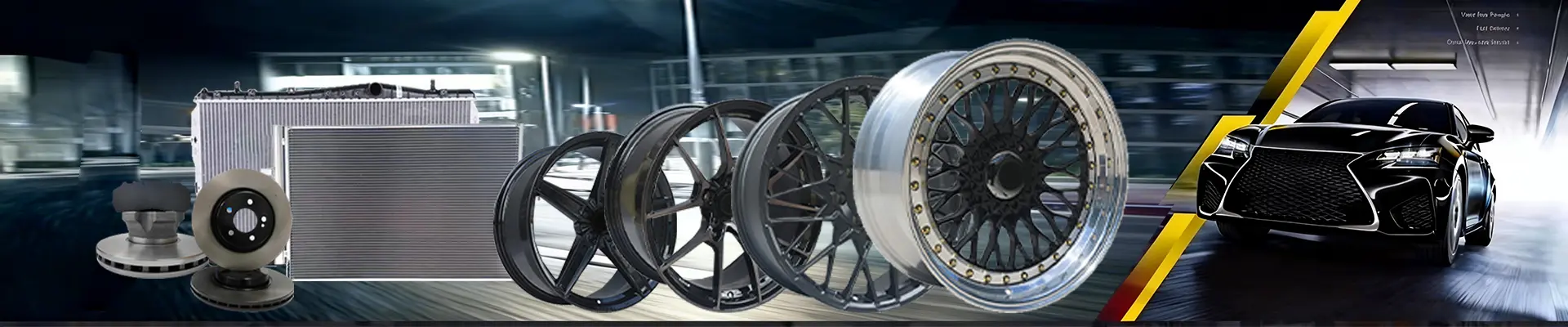
Car Rims Price in Italy: 2026 Wholesale Supplier Guide

Car Rims Price in Italy: 2026 Wholesale Supplier Guide
Lower sticker prices on car rims in Italy rarely mean lower total cost — certification amortization, batch color variance, and packaging compliance quietly erase the gap between factory-direct and distributor quotes.
In 2026, factory-direct car rims price in Italy runs substantially below European brand catalogs, yet the real savings depend on balancing MOQ thresholds, TUV/VIA/JWL certification overhead, and lead-time discipline rather than chasing the lowest per-piece quote.
Walking the halls at Automechanika Frankfurt over the years, I noticed Italian buyers flipping spec sheets with a particular kind of suspicion — they would check the alloy grade first, then the certification stamp, and only then glance at the unit price. Early in my career on the quality inspection floor, I learned that a rim’s cost story begins long before the quotation lands in your inbox. I once oversaw a shipment of 20-inch forged wheels finished in matte gunmetal for an Italian modification brand; the batch arrived at Genoa with visible color banding across spokes, and the entire container sat in bonded storage for weeks before rework was negotiated. That episode reshaped how I read every car rims price in Italy quotation — the line items you cannot see matter more than the ones you can [NEED_CITE: European aftermarket wheel market cost structure breakdown by AIT trade data].
Let me walk you through what actually moves the needle on pricing, where distributors and factories diverge, and which hidden costs catch first-time importers off guard.
What Drives Car Rims Price in Italy’s 2026 Market?
Three variables dominate the quotation: aluminum ingot fluctuation, certification overhead, and Mediterranean logistics cost — and they rarely move in sync.
Aluminum alloy used in wheel manufacturing follows the LME A356 or equivalent grade pricing, and ingot cost swings ripple through every quotation within a single quarter [NEED_CITE: LME aluminum alloy A356 pricing trend impact on wheel manufacturing input cost]. When ingot prices climb, casting and forging workshops adjust billet surcharges, and the per-piece car rims price in Italy shifts even if the design stays identical. European buyers often lock in semi-annual pricing windows with their suppliers to absorb this volatility, while spot buyers absorb each shipment’s raw material delta directly.
Certification is the second driver. TUV, VIA, JWL, and DOT each require structural fatigue testing, radial runout measurement, and impact resistance validation — and each certification cycle carries a fixed laboratory fee that must be amortized across the order volume [NEED_CITE: TUV and VIA wheel certification testing scope and fee structure comparison]. A buyer ordering a few dozen pieces per SKU will see certification cost per unit climb noticeably, while a buyer committing to full container loads spreads the same fee across thousands of units.
The third driver is logistics. Ocean freight from East Asian manufacturing hubs to Genoa, Naples, or Gioia Tauro has stabilized compared to the pandemic-era spikes, but container rates still fluctuate seasonally, and Italian customs documentation — including EUR.1 movement certificates for preferential tariff treatment where applicable — adds procedural cost that inexperienced buyers overlook [NEED_CITE: Mediterranean container freight rate seasonality and Italian customs documentation requirements for wheel imports].
From what I have seen across multiple sourcing cycles, buyers who treat these three variables as a combined system — rather than negotiating each line item in isolation — end up with a far more predictable car rims price in Italy over a full fiscal year.
Factory-Direct vs. Distributor: Where’s the Real Savings?
Going direct cuts the per-piece price noticeably, but it transfers MOQ commitment, quality control responsibility, and lead-time risk onto the buyer.
European distributors typically hold localized inventory, offer mixed-SKU pallets, and provide credit terms — and they price these conveniences into every rim. Factory-direct sourcing removes the intermediary margin, and the per-unit car rims price in Italy can drop substantially, often approaching the range where modification shops and e-commerce sellers can experiment with new designs without destroying their margin structure.
However, the trade-offs are real. Factories generally require minimum order quantities that distributors do not — and the threshold varies by whether the SKU is a stock pattern or a fully custom offset and finish combination. A modification shop in Milan ordering staggered fitments in small batches will face a different MOQ conversation than a wholesaler in Bari loading full containers of 18-22 inch mixed sizes.
| Sourcing Channel | MOQ Flexibility | Certification Burden | Quality Control Ownership | Lead-Time Predictability |
|---|---|---|---|---|
| European Distributor | High | Absorbed by distributor | Distributor-managed | Short, stock-dependent |
| Factory-Direct | Moderate to Low | Buyer-amortized | Buyer-verified | Standard production cycle |
| Trading Company | Variable | Unclear origin | Fragmented | Uncontrolled |
I worked with a European wholesaler who shifted from a German distributor to direct factory procurement for a mixed 18-to-22 inch program. The per-piece cost dropped noticeably, and the annual volume justified the MOQ. But the first shipment required the buyer’s own QC team to validate spoke runout and bead seat dimensions at the loading port — a responsibility the distributor had previously handled silently [NEED_CITE: Comparative cost and responsibility analysis of factory-direct versus distributor wheel procurement in European aftermarket].
The lesson: factory-direct car rims price in Italy is genuinely lower, but only if the buyer has the infrastructure — or the partner — to manage inspection, certification documentation, and shipment consolidation.
How Do Specifications Affect Per-Piece Pricing?
Size, manufacturing process, and surface finish form a three-layer pricing ladder — and the steepest jumps come from process choice, not diameter.
Within the same manufacturing method, moving from 17-inch to 22-inch adds material cost and machining time, but the increment is gradual. The real pricing cliff appears when you cross from gravity casting into flow-forming or forged construction. Forged wheels demand significantly higher press tonnage, slower cycle times, and more rigorous material traceability — and these factors push the car rims price in Italy upward by a wide margin compared to cast equivalents [NEED_CITE: Manufacturing process cost comparison across gravity casting, flow-forming, and forged alloy wheel production].
Surface finish adds another layer. Machined face, gloss black, and hyper silver are relatively standardized in powder coating and CNC finishing workflows. Custom colors — particularly matte gunmetal, bronze, or multi-tone lip treatments — require tighter batch-to-batch color control, additional masking steps, and sometimes hand-finishing, all of which raise the unit cost.
| Specification Factor | Entry Level | Mid Range | Premium Range |
|---|---|---|---|
| Manufacturing Process | Gravity Casting | Flow-Formed | Fully Forged |
| Diameter Range | 15–17 inch | 18–20 inch | 21–24 inch |
| Surface Finish | Standard Powder Coat | Machined Face | Custom Color with Lip Detail |
| Certification Scope | Basic Structural | TUV or VIA | Multi-Market TUV/VIA/JWL/DOT |
A modification shop in Rome once reordered a 20-inch forged design in a custom matte finish, expecting the per-piece car rims price in Italy to scale linearly with the 18-inch version they had purchased earlier. The actual increase was steeper than anticipated — not because of the two-inch diameter difference, but because the forging die amortization and the custom color matching both reset at the new size. Understanding this ladder prevents budget surprises when expanding a product line across diameters.
What Hidden Costs Do Buyers Overlook?
Certification amortization, packaging compliance, and color rework are the three cost traps that turn a clean quotation into a margin erosion.
Certification is the most misunderstood. A single TUV or VIA test cycle covers a specific wheel design and size combination — and if the buyer later requests the same design in a different diameter or offset, a new test cycle is typically required. The laboratory fee itself is fixed, but when spread across a small trial order, the per-unit certification cost becomes significant [NEED_CITE: TUV wheel certification retest trigger conditions and cost amortization logic for multi-SKU orders]. Buyers who plan their SKU roadmap upfront and batch similar diameters into a single certification window avoid this trap.
Packaging compliance is subtler. Italian and broader EU retail channels increasingly expect individual box packaging with specific labeling, barcode placement, and protective foam or cardboard dividers — not the bulk pallet wrap that satisfies a warehouse-to-warehouse shipment. The incremental packaging cost per piece is modest, but across a full container it compounds, and buyers who request last-minute packaging changes after tooling is complete face rework delays.
Color rework is the most painful. A batch of wheels that passes factory QC under controlled lighting can still show visible shade variation under Mediterranean sunlight or showroom halogen. When the色差 tolerance between spokes or between batches exceeds the buyer’s visual standard, the options are costly: accept the batch at a discount, return for repaint, or absorb the inventory write-down. I have seen entire containers of custom-finished rims sit in European bonded warehouses for extended periods while the buyer and factory negotiated rework terms — and the storage fees alone erased any per-piece savings the direct procurement had delivered.
How to Choose a Reliable China-Based Supplier?
Look for multi-market certification coverage, MOQ flexibility that matches your order pattern, and transparent inspection documentation — not just the lowest unit quote.
The supplier landscape for alloy wheels spans thousands of factories, and the gap between a well-run operation and a marginal one shows up in three places: certification portfolio, production planning transparency, and after-sales accountability.
Certification is the first filter. A factory holding TUV, VIA, JWL, DOT, and CCC simultaneously has demonstrated the ability to meet European, Japanese, and North American structural standards — and this multi-certification capability signals disciplined process control rather than one-off test passing [NEED_CITE: Multi-certification wheel factory capability indicators and quality system maturity correlation]. Buyers targeting the Italian market should prioritize suppliers whose TUV and VIA documentation is current and transferable to the buyer’s specific SKU set.
MOQ flexibility is the second filter. A factory that can accommodate trial orders of a few dozen pieces for custom designs — and scale to full container volumes for stock programs — aligns with the needs of modification shops testing new styles and e-commerce sellers validating SKU demand before committing to larger purchases. Rigid MOQ structures force buyers into overstock or push them toward trading companies that obscure the actual manufacturing source.
Inspection transparency is the third filter. Requesting pre-shipment inspection reports — covering radial runout, lateral runout, dynamic balance, and finish adhesion — and having the option to deploy a third-party inspector at the loading port separates accountable factories from those who rely on the buyer to discover defects after arrival. A supplier offering a multi-year structural warranty and standing behind it with documented claim procedures demonstrates confidence in batch consistency [NEED_CITE: Pre-shipment inspection parameters and third-party audit practices in alloy wheel export quality control].
From my experience coordinating shipments into Southern European ports, the factories that perform best over repeat orders are not necessarily the cheapest on the first quotation — they are the ones whose certification is in order, whose MOQ matches the buyer’s real order rhythm, and whose inspection records hold up under third-party scrutiny.
Conclusion
The real car rims price in Italy is shaped less by the quoted unit rate and more by how certification, MOQ, finish consistency, and logistics are managed across the sourcing cycle. Factory-direct procurement delivers meaningful per-piece savings, but only when the buyer invests in specification planning, batch-level quality verification, and packaging compliance upfront — turning a low quotation into a reliably profitable supply chain.


