Summer 25% discount on all last year's bike models

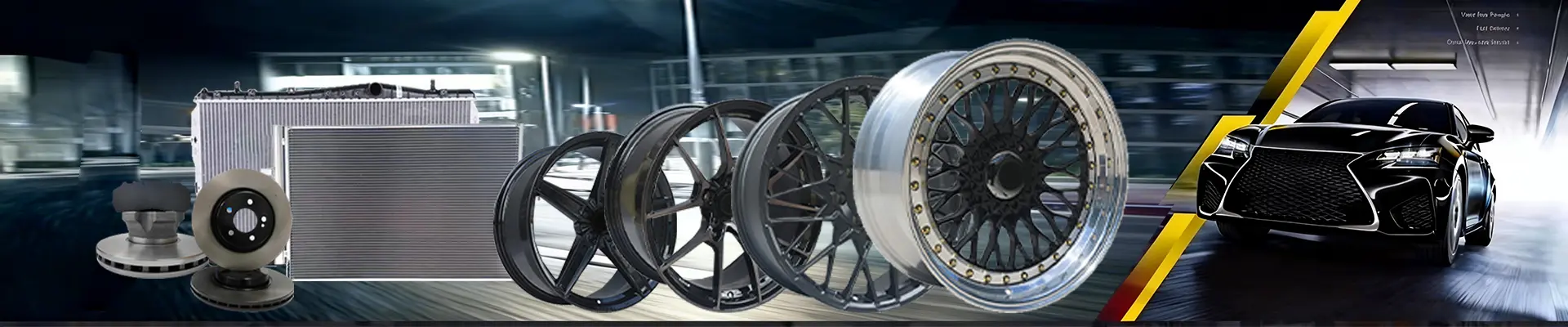
Buy Wheel Accessories with Free Shipping | Wholesale Supplier

Buy Wheel Accessories with Free Shipping | Wholesale Supplier
Free shipping on wheel accessories sounds like a deal, but the real cost hides in fitment mistakes—wrong center caps or lug nuts cost far more in returns than freight ever saved.
Wheel accessories that qualify for free shipping are lightweight, high-density items like center caps, lug nuts, valve stems, and TPMS sensors. The key is balancing freight savings against fitment accuracy before placing a bulk order.
I still remember a container of center caps we shipped to Dubai years ago. Every single piece was manufactured to drawing specs, yet the client couldn’t install a single one. The clip orientation was reversed for their specific vehicle year. The entire shipment sat at Jebel Ali port, and the storage fees alone wiped out the margin on that order. Since then, I never ship a single batch without confirming the exact vehicle model, year, and clip direction—sometimes a thirty-minute video call saves a mid-five-figure loss. [NEED_CITE: root cause distribution of wheel accessory return claims in cross-border e-commerce]
Getting fitment right is just as important as getting freight right, and that is where most buyers trip. Let me walk you through what actually matters when you buy wheel accessories with free shipping.
What Wheel Accessories Qualify for Free Shipping?
Lightweight, high-density accessories such as center caps, lug nuts, valve stems, hubcaps, and TPMS sensors are the most likely to meet free shipping thresholds because their weight-to-value ratio keeps logistics costs low.
When suppliers offer free shipping, they typically set a minimum order quantity that makes the per-unit freight cost negligible. For wheel accessories, this threshold is easier to hit compared to full alloy wheels. A single alloy wheel weighs several kilograms and takes up significant cubic space, while a box of center caps or a bag of lug nuts is compact and dense. [NEED_CITE: volumetric weight calculation standards used by international freight carriers for auto parts]
Here is how different accessory categories typically perform against free shipping thresholds:
| Accessory Type | Weight per Unit | Volume per Unit | Free Shipping Threshold Ease |
|---|---|---|---|
| Center Caps | Low | Low | Noticeably easy |
| Lug Nuts | Low | Low | Noticeably easy |
| Valve Stems | Minimal | Minimal | Noticeably easy |
| TPMS Sensors | Low | Low | Noticeably easy |
| Hubcaps | Moderate | Moderate | Standard |
| Wheel Spacers | High | Moderate | Vulnerable |
| Full Alloy Wheels | High | High | Vulnerable |
A tire shop in Southeast Asia once told me they used to order valve stems in small quantities and pay freight that exceeded the product cost. Once they found a supplier offering free shipping on accessories, they consolidated their valve stem, center cap, and lug nut orders into one shipment. The per-unit freight cost dropped to near zero, and they could restock small-batch items without waiting for a full container. [NEED_CITE: freight cost structure comparison for lightweight versus heavy auto parts in LCL shipments]
The takeaway is simple: if your accessory order consists mainly of small metal or plastic parts, free shipping is a realistic expectation. If you are mixing in heavy spacers or full wheels, the free shipping offer likely applies only to the accessory portion of your order.
How to Avoid Fitment Mistakes When Buying in Bulk?
Before placing any bulk order, you must confirm the exact vehicle make, model, year, and trim, then verify clip direction, thread pitch, and seat angle through video or physical sample—never rely on catalog photos alone.
This is where the real money gets lost. I have seen buyers order center caps based on a generic "fits Toyota" label, only to discover that the 2018 model uses clips facing inward while the 2021 facelift switched to outward-facing clips. The parts were dimensionally correct, but they simply would not snap in. [NEED_CITE: vehicle-specific center cap retention clip orientation variations across model year facelifts]
The fitment verification checklist should cover four critical parameters:
- Center bore diameter: Must match the wheel hub bore within tight tolerance; even a small mismatch causes vibration or impossible installation.
- Clip type and direction: Retention clips vary by vehicle year and even by trim level; orientation must be confirmed visually.
- Thread pitch and diameter for lug nuts: Metric versus imperial, fine versus coarse pitch—mixing these up strips threads or prevents seating.
- Seat angle for lug nuts: Conical, ball, mag, and flat seats are not interchangeable; a mismatched seat damages the wheel mounting surface over time.
A modification shop in the United States once ordered a large batch of lug nuts for a popular domestic truck platform. Before shipping, we did a video call where the shop owner held up the wheel and the existing lug nut, and we compared the seat angle under a macro lens. The angle was conical, but the degree was slightly different from the standard catalog listing. We adjusted the tooling before production. That thirty-minute call prevented an entire batch from being scrapped. [NEED_CITE: lug nut seat angle specifications and wheel damage risk per SAE standards]
This is where working with a supplier like Ouya makes a practical difference. We maintain a fitment database covering multiple vehicle platforms and always offer video confirmation before bulk production. Our team cross-references your order against the specific vehicle year and trim, and we flag any discrepancies before the first piece goes into the mold or the lathe. It is not a marketing promise; it is a process built from years of watching good orders go bad over preventable details.
Free Shipping vs. Volume Discount: Which Saves More?
For small to mid-size orders, free shipping delivers better total cost; for large bulk orders, volume-based unit price discounts typically outweigh freight savings. The crossover point usually falls in the mid-hundreds to low thousands of pieces.
Many buyers assume free shipping always means the cheapest option. That is not necessarily true. Some suppliers embed a hidden freight premium into the unit price when offering free shipping. The product looks slightly more expensive per piece, but the "free" shipping makes the total seem lower. For small orders, this works in your favor. For large orders, the embedded premium compounds, and a supplier offering a lower unit price with paid freight may come out ahead. [NEED_CITE: landed cost comparison methodology for free shipping versus volume discount procurement models]
Consider this scenario: A buyer in Latin America needed center caps for an e-commerce listing. They ordered a few hundred pieces with free shipping, and the total landed cost was competitive. But when they scaled to several thousand pieces for restocking, the per-unit price under the free shipping tier was noticeably higher than what a volume-discount tier would have offered, even with paid freight. Switching to a volume-based pricing model with a separate freight quote saved them a meaningful percentage on the total order.
The decision framework is straightforward:
- Order size below a few hundred pieces: Free shipping is usually the better deal. The freight savings offset any slight unit price premium.
- Order size in the mid-hundreds to low thousands: Request both pricing models side by side. Calculate total landed cost per unit under each scenario.
- Order size at container level: Volume discount almost always wins. At this scale, freight is negotiated separately, and the per-unit product price dominates the total cost.
Always ask the supplier for a written quote showing both options. A transparent supplier will give you the breakdown without hesitation. If they only push one model, that is a signal to dig deeper.
What Documentation Do You Need for Customs Clearance?
Wheel accessory shipments require a complete commercial invoice, detailed packing list, material composition documentation, and a vehicle fitment compatibility list to clear customs smoothly in most destination countries.
Customs clearance is where poorly prepared shipments get stuck, and the costs accumulate fast—storage fees, inspection charges, and in worst cases, forced return shipments. I have seen accessory orders held at port for weeks because the packing list did not match the invoice quantities, or because the material declaration was missing entirely. [NEED_CITE: customs documentation requirements for automotive aftermarket parts under international trade regulations]
The essential documents include:
- Commercial invoice: Must list each item with accurate HS code, unit price, total value, and country of origin.
- Packing list: Must detail carton count, gross and net weight, dimensions, and item breakdown per carton.
- Material composition statement: Required by many customs authorities to verify that the products do not contain restricted substances. This is especially relevant for metal parts like lug nuts and spacers.
- Vehicle fitment list: Some destination countries require a declaration of which vehicle makes and models the accessories are compatible with, particularly for safety-related items like TPMS sensors and lug nuts.
- Certificate of origin: Required for preferential tariff treatment under applicable trade agreements.
An e-commerce seller in Australia once received a container of hubcaps and center caps that was held at the border because the supplier’s packing list listed "auto accessories" as a generic description instead of itemizing each SKU with its corresponding HS code. The customs broker spent days sorting it out, and the storage fees added up to a significant unexpected cost. After that, the seller switched to a supplier who provided itemized, customs-ready documentation with every shipment. [NEED_CITE: common customs clearance failures and their cost impact for automotive accessory imports]
At Ouya, every export shipment includes a full documentation package prepared in accordance with the destination country’s requirements. We itemize every SKU on the packing list, provide material declarations for all metal components, and include vehicle fitment data where applicable. This is not an optional add-on; it is standard procedure for every order that leaves our facility. It is the kind of operational discipline that keeps your goods moving through the port instead of sitting in a bonded warehouse.
Conclusion
Buying wheel accessories with free shipping is a smart procurement strategy only when fitment accuracy and documentation are fully resolved before the order ships. Lightweight accessories like center caps, lug nuts, and valve stems are the best candidates for free shipping programs, but the real savings come from avoiding costly returns and customs delays. Confirm every fitment parameter through video or sample verification, compare free shipping against volume discount pricing for larger orders, and ensure your supplier provides complete customs documentation as standard practice. The freight savings mean nothing if the product does not fit or cannot clear the border.


