Summer 25% discount on all last year's bike models

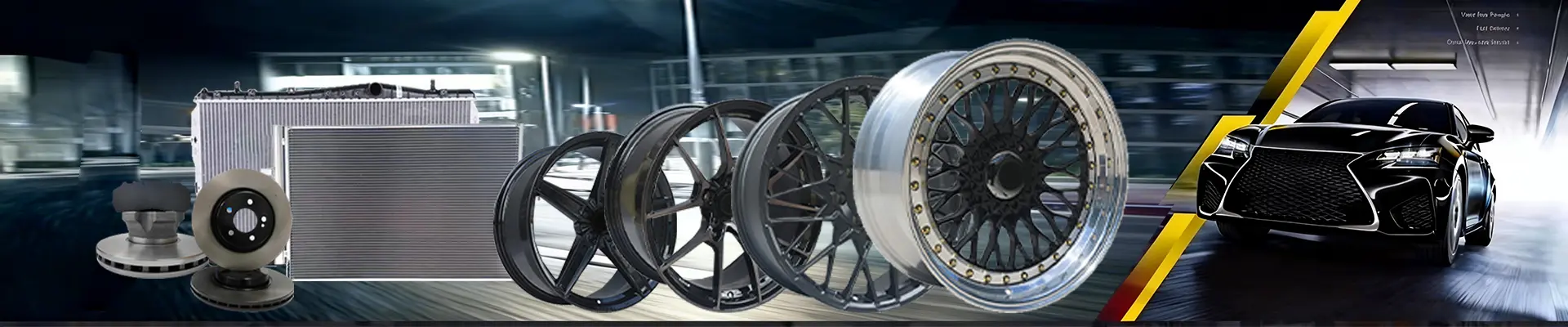
Best Alloy Wheels for Germany Market: 2026 Wholesale Supplier Guide

Best Alloy Wheels for Germany Market: 2026 Wholesale Supplier Guide
Most buyers think German importers only care about price. The real reason they reject shipments is that the wheels cannot pass TÜV inspection at the port.
Entering the Germany market requires alloy wheels to simultaneously meet TÜV certification, strict surface finish standards, and precise fitment data. Choosing a reliable supplier matters more than choosing the right style.
I still remember standing at Qingdao Port years ago, watching a full container of matte black wheels get flagged. The buyer in Hamburg sent back inspection photos—tiny pinholes along the spoke edges. Structurally, the wheels were fine. But the German buyer inspected them under a magnifying glass, and the entire shipment nearly got returned. That moment drilled one truth into my head: European surface quality tolerance is not "close enough"—it is "zero tolerance." Since then, I always lead with certifications and parameters before discussing price, because buyers fear customs rejection far more than a slightly higher unit cost.
Let me walk you through what it actually takes to supply alloy wheels into Germany, based on real shipment experience and buyer feedback.
What certifications do alloy wheels need for the Germany market?
TÜV certification is the hard gate. VIA and JWL serve as supplementary credentials. Without proper certification documents, your cargo simply cannot clear German customs.
Germany enforces some of the strictest wheel import regulations in Europe. The Kraftfahrt-Bundesamt (KBA) requires that aftermarket alloy wheels sold or installed on vehicles registered in Germany carry valid type approval documentation [NEED_CITE: German vehicle equipment regulations for aftermarket wheel approval requirements]. TÜV Rheinland or TÜV Thüringen certification is the primary pathway for non-OEM wheels entering this market.
Here is what the certification landscape actually looks like in practice:
| Certification | Scope | German Market Necessity | Document Verification |
|---|---|---|---|
| TÜV (Rheinland/Thüringen) | Full structural and material testing per German StVZO | Mandatory for aftermarket | Verifiable via certificate number |
| VIA | Japanese light alloy wheel standard | Supplementary, recognized in EU | Standard-level traceability |
| JWL | Japanese industrial standard for passenger car wheels | Supplementary | Sample-level traceability |
| ISO 9001 | Quality management system | Expected by B2B buyers | Full batch-level documentation |
| DOT | US Department of Transportation | Not applicable for Germany | Not relevant |
A distributor in the Netherlands once placed a trial order with a factory that claimed TÜV compliance. When the container arrived in Rotterdam, customs requested the original TÜV test report. The factory provided a photocopy with a certificate number that could not be verified in the TÜV database. The entire shipment was held for weeks, and the distributor lost the selling season.
The lesson: always request the original TÜV certificate and independently verify the certificate number through the issuing body’s official portal before placing any bulk order [NEED_CITE: TÜV certificate verification procedure for imported alloy wheels].
Beyond TÜV, German buyers also expect compliance with ECE Regulation 124, which governs the approval of wheels for passenger cars and their trailers across the European Economic Area [NEED_CITE: ECE R124 wheel approval scope and requirements]. If your supplier cannot produce a valid ECE R124 test report alongside the TÜV document, treat it as a serious red flag.
Which alloy wheel sizes and styles sell best in Germany?
The 17-inch to 19-inch range dominates the German aftermarket, with deep concave and multi-spoke designs favored by the modification segment. Accurate offset (ET) and bolt pattern data are non-negotiable.
Germany has one of the most active automotive modification cultures in Europe. The German tuning scene—rooted in brands like ABT, Brabus, and Mansory—has shaped buyer expectations toward aggressive styling and precise fitment. Understanding which sizes and styles move fastest helps you stock the right inventory and avoid dead weight.
| Size Range | Market Segment | Popularity | Typical ET Range | Fitment Complexity |
|---|---|---|---|---|
| 17 inch | Entry-level replacement, fleet | High | ET 35–50 | Standard |
| 18 inch | Mainstream aftermarket, OEM+ | Highest | ET 30–48 | Standard to moderate |
| 19 inch | Premium aftermarket, SUV | High | ET 25–45 | Moderate |
| 20 inch and above | Luxury, performance modification | Moderate to low | ET 20–40 | High |
A modification shop in Munich ordered a batch of deep concave 19-inch wheels for BMW and Audi applications. When the wheels arrived, the bolt pattern was technically correct—5×112—but the center bore was machined to a generic size rather than the precise hub-centric diameter required. The result: every wheel needed hub rings for proper installation, and several customers complained about vibration at highway speeds. The shop had to eat the cost of returns and replacements.
The takeaway: German buyers expect hub-centric precision. The center bore must match OEM specifications exactly, not approximately [NEED_CITE: hub-centric vs lug-centric wheel fitment standards for European vehicles]. Bolt pattern tolerance should stay within a tight range—deviations of even a fraction of a millimeter cause installation complaints.
In terms of surface finish, matte black remains the top seller across all segments, followed by gunmetal and hyper silver. Gloss black and machined face finishes also perform well, particularly in the 18- and 19-inch ranges. Chrome has declined in popularity for aftermarket applications, though it still appears in specific luxury and classic car segments.
How to avoid surface quality claims from German buyers?
Pinholes, scratches, and color inconsistency are the three most common complaint sources. Full inspection of every wheel before shipment—not random sampling—is the only acceptable standard for the German market.
This is where most suppliers outside Europe fundamentally misunderstand the expectation. In many markets, a visual inspection of a sample from each batch is considered adequate. German buyers operate differently. They expect every single wheel to be free of visible surface defects, and they will use magnification tools during receiving inspection.
| Defect Type | Root Cause | Detection Method | Buyer Tolerance |
|---|---|---|---|
| Pinholes (sand holes) | Casting porosity, inadequate degassing | Visual inspection, magnification | Zero tolerance on spoke edges |
| Scratches | Handling, packaging contact | Visual, tactile | Zero tolerance on visible faces |
| Color variation | Inconsistent powder coating or painting | Side-by-side comparison under controlled light | Noticeable difference unacceptable |
| Clear coat peeling | Poor adhesion, insufficient curing | Tape pull test, long-term exposure | Structurally linked to durability |
A European distributor received a shipment of gunmetal-finished wheels where the color appeared acceptable under warehouse fluorescent lighting. However, when the end customer installed the wheels and viewed them under direct sunlight, a subtle shade mismatch between wheels from different production batches became obvious. The distributor filed a claim for the entire batch.
The underlying issue: powder coating and painting processes must maintain tight color consistency across the full production run [NEED_CITE: surface coating quality control standards for automotive alloy wheels]. This requires controlled curing temperatures, consistent film thickness, and batch-level color matching against approved master samples.
For matte black finishes specifically, the surface texture must be uniform. Any glossy spots or uneven texture indicate inconsistent powder application. German buyers will reject the lot.
Packaging also plays a direct role in surface protection. European buyers expect each wheel to be individually wrapped in protective foam or bubble film, with cardboard dividers between wheels stacked on the same pallet. Corner protectors on the pallet itself are mandatory. A distributor in Hamburg reported that a shipment arrived with damaged packaging—the wheels themselves were fine, but the time spent repackaging for end customers cost the distributor significant labor expense, and a formal claim followed.
What should you check before placing a bulk order?
Request the original TÜV certificate, a detailed packaging specification, and past European customer inspection reports. If a supplier hesitates on any of these, walk away.
The pre-order verification stage is where you protect yourself from costly mistakes. German market entry is not a space for trust-based assumptions—every claim must be documented and independently verifiable.
Start with the TÜV certificate. Ask for the original document, not a scanned photocopy. Verify the certificate number directly with the issuing TÜV body. Confirm that the certificate covers the exact wheel model, size, offset, and bolt pattern you are ordering. A certificate that covers a different variant does not protect your shipment.
Next, request the supplier’s packaging specification in writing. This should detail:
- Individual wheel wrapping material and method
- Pallet stacking pattern and maximum layers
- Corner protector and edge board specifications
- Container loading plan and weight distribution
A buyer in the UK learned this the hard way. Their first trial order arrived in acceptable condition because the supplier used extra packaging for the sample shipment. The second order—a full container—used minimal packaging to save cost. Multiple wheels arrived with rim curb damage from contact during transit. The supplier refused to accept responsibility, claiming the damage occurred during ocean freight. Without a written packaging agreement, the buyer had no basis for a claim.
Third, ask for inspection reports from previous European shipments. A supplier with genuine Germany market experience will have documentation showing defect rates, inspection methods, and resolution records. If they cannot provide this, it likely means they have not shipped to Europe at scale.
Finally, confirm the supplier’s ability to provide complete customs documentation. This includes the commercial invoice, packing list, certificate of origin, and—critically—the TÜV and ECE R124 certificates formatted for German customs authorities [NEED_CITE: customs documentation requirements for alloy wheel imports into Germany]. Missing or incorrectly formatted documents cause delays that can stretch into weeks.
How to choose a reliable alloy wheel supplier for Europe?
Evaluate based on certification completeness, proven European export experience, flexible minimum order quantities, and responsive after-sales support. A supplier that treats you as a partner—not just an order number—will save you far more money than the lowest unit price.
Finding a supplier capable of consistently meeting German market standards requires looking beyond the factory tour photos and price lists. The real differentiators are operational and cultural.
Certification completeness comes first. A credible supplier for the European market should hold TÜV certification for their core product range, ISO 9001 for quality management, and ideally VIA or JWL for additional credibility. These are not optional extras—they are baseline requirements.
Proven export experience to Europe matters enormously. A factory that regularly ships to Germany, the Netherlands, or the UK understands the documentation requirements, packaging expectations, and quality tolerance levels. A factory that primarily serves markets with less stringent requirements may not have the internal processes to meet German standards consistently.
Flexible minimum order quantities allow you to test the market without overcommitting. A supplier willing to accept smaller initial orders—demonstrating confidence in their product quality—reduces your financial risk. As a Middle East distributor once noted, the ability to start with a modest trial order and scale up based on actual market response made the difference between a successful product launch and a warehouse full of unsold inventory.
Responsive after-sales support is the final critical factor. When issues arise—and they will, even with the best suppliers—the speed and professionalism of the response determine whether a problem becomes a crisis. A supplier that acknowledges issues, investigates root causes, and provides corrective action reports builds long-term trust. One that deflects blame or goes silent after shipment is a supplier you should not work with again.
Jinan Yoker Auto Parts Co., Ltd. operates under the Ouya trademark with an annual production capacity of ten million pieces, serving global aftermarket, OEM, and modification markets. The company holds TÜV, ISO, VIA, JWL, DOT, and CCC certifications, providing the documentation foundation required for European market entry. Custom orders start from a minimum of one hundred pieces, with lead times of fifteen to thirty days. The product range covers alloy wheels from twelve to twenty-four inches across passenger cars, SUVs, luxury vehicles, trucks, racing, and motorcycles, with surface finishes including machined face, chrome, gloss and matte black, bronze, gunmetal, hyper silver, and full custom paint options. Complete customs documentation support is provided as standard.
Conclusion
Germany’s alloy wheel market rewards preparation, not price aggression. TÜV certification is non-negotiable, surface quality demands full inspection rather than sampling, and fitment precision separates accepted shipments from rejected containers. A supplier with verified European export experience, flexible order terms, and transparent documentation practices is your strongest asset in this market.


