Summer 25% discount on all last year's bike models

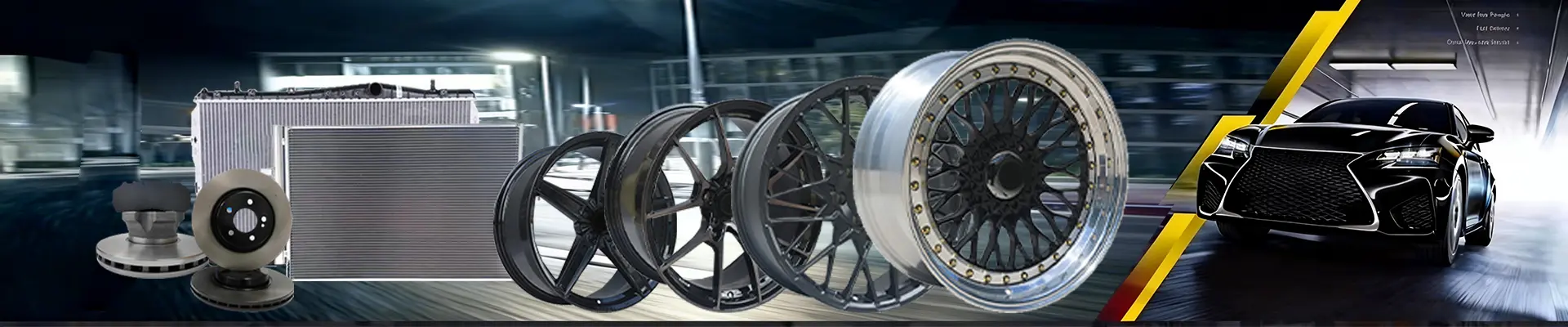
Alloy Wheels Price in Colombia: 2026 Wholesale Buyer Guide

Alloy Wheels Price in Colombia: 2026 Wholesale Buyer Guide
Low-price alloy wheels often cost more than premium ones once returns, claims, and customs penalties are factored in.
Alloy wheels price Colombia in 2026 is shaped by four pillars: rim diameter, manufacturing process, surface finish, and order volume. Wholesale buyers who understand how these variables interact can cut per-piece landed costs substantially by sourcing factory-direct with full international certification, rather than relying on regional middlemen or unverified catalog suppliers.
Walking the floor at Automechanika Bogotá a few cycles back, I watched a tuning shop owner from Medellín flip through a supplier catalog, tapping a glossy 20-inch forged wheel listing. He muttered that the FOB number looked great, but his accountant had already told him the landed figure would tell a different story. That conversation stuck with me because it captures exactly what most first-time importers into Colombia miss: the invoice price is only the opening move. Real cost visibility means tracing every step from the foundry floor in Shandong to the warehouse rack in Bogotá—and knowing which levers actually move the alloy wheels price Colombia in your favor [NEED_CITE: Colombia import tariff structure for aluminum alloy wheel rims under Andean Community Decision 535].
If you are a distributor, a tuning shop, or an e-commerce seller pulling containers into Cartagena or Buenaventura, the rest of this guide breaks down exactly where your money goes and how to keep more of it.
What Determines Alloy Wheels Price in Colombia in 2026?
Size, manufacturing process, surface finish, and order volume are the four pricing pillars every buyer must weigh before requesting a quote.
Let me be direct: when a Bogotá distributor asks me why two visually similar 18-inch wheels carry wildly different alloy wheels price Colombia quotes, the answer almost always traces back to one of these four variables. Diameter sets the raw aluminum baseline. Process determines labor and energy intensity. Finish adds surface treatment layers. Volume decides whether fixed costs get spread thin or thick.
A common mistake I see among newer buyers is fixating on the per-piece FOB figure while ignoring how these variables compound. I once reviewed a quote for a Latin American client who was thrilled by a rock-bottom price on 17-inch cast wheels—until we mapped out the finish upgrade his end-market demanded and the MOQ penalty for splitting SKUs across three sizes. The alloy wheels price Colombia per piece jumped noticeably once the full spec was locked [NEED_CITE: global aluminum alloy wheel cost drivers per International Aluminum Institute reports].
Here is how each pillar behaves in practice:
- Diameter: Raw material weight scales roughly with the square of the radius, so moving from a 15-inch to a 19-inch wheel is not a linear cost step—it compounds.
- Process: Gravity casting sits at the lowest cost tier, low-pressure casting adds density and consistency, flow-forming sits in the middle, and forging occupies the premium end due to multi-step CNC and heat-treatment cycles.
- Finish: A standard gloss black paint job adds a thin cost layer. A machined face with clear coat requires a secondary CNC pass. Chrome plating or multi-layer custom colors push the price further up.
- Volume: Fixed costs—mold amortization, setup, QC documentation—get distributed across more units as volume rises, compressing per-piece cost meaningfully.
Understanding these pillars is the foundation for reading any alloy wheels price Colombia quotation accurately.
Alloy Wheel Price Breakdown by Size and Manufacturing Process
A size-by-process matrix reveals where the real cost jumps occur and where smart buyers find value.
This is the section I wish every buyer would study before sending an inquiry. Too many purchasing decisions get derailed by comparing a cast 15-inch price against a forged 20-inch price and concluding that forging is impossibly expensive. It is not—the variables are just tangled.
Let me walk you through how a typical matrix looks when you separate diameter from process. The table below uses qualitative cost tiers rather than fabricated figures, because real quotes shift with aluminum ingot indices and exchange rates [NEED_CITE: aluminum alloy wheel rim HS code 8716.90 tariff classification under Colombian customs].
| Diameter Range | Gravity Casting | Low-Pressure Casting | Flow-Formed | Forged |
|---|---|---|---|---|
| 12–16 inch | Entry tier | Moderate tier | Higher tier | Premium tier |
| 17–20 inch | Moderate tier | Mid-high tier | High tier | Top tier |
| 21–24 inch | Mid-high tier | High tier | Top tier | Ultra-premium tier |
A few patterns jump out from this structure. First, within the same diameter, moving from gravity casting to low-pressure casting adds a moderate cost step—justified by better density, fewer internal pores, and stronger T6 heat-treatment response. Second, flow-forming sits between casting and forging, offering near-forged barrel strength at a cost noticeably below full forging. Third, forged wheels in the 21–24 inch range command the highest tier because both the billet material and the CNC machining time scale steeply.
I worked with a modification shop in Cali that was quoting customers for staggered setups—19-inch front, 20-inch rear. They initially wanted all forged, assuming the retail markup would absorb the cost gap. After we ran the numbers, they switched the front pair to flow-formed and kept the rears forged. The alloy wheels price Colombia per unit dropped enough to let them offer a competitive package without sacrificing the visual impact their clients expected [NEED_CITE: flow-forming versus forging mechanical property comparison per SAE J2530 wheel testing standards].
The takeaway: do not let process alone dictate your sourcing decision. Match process to diameter and end-use, and the per-piece cost becomes far more manageable.
How Surface Finish and Customization Affect Your Per-Piece Cost
Paint and machined finishes add measurable cost—know which ones justify the markup for your market before committing to a production run.
Finish is the variable that catches the most buyers off guard. Two wheels with identical diameter and process can carry meaningfully different alloy wheels price Colombia tags purely because of what happens in the painting booth and the CNC lathe.
Here is a qualitative ranking of common finishes and how they shift cost:
| Finish Type | Cost Impact | Typical Market Positioning |
|---|---|---|
| Standard gloss/matte black paint | Entry level | Volume sellers, fleet, replacement |
| Gunmetal or hyper silver | Moderate | Mid-range aftermarket, tuning shops |
| Machined face with clear coat | Higher | Premium aftermarket, e-commerce listings |
| Chrome plating | High | Show cars, luxury retrofit |
| Full custom color match | Highest | Exclusive tuning, OEM-style programs |
A distributor I know in Barranquilla learned this the hard way. He ordered a mixed container of 18-inch wheels in gloss black and machined face, assuming the price gap would be small. When the invoice arrived, the machined-face SKUs carried a noticeably higher per-piece cost because of the additional CNC pass and the clear-coat curing cycle. His margin on those SKUs compressed until he adjusted retail pricing [NEED_CITE: wheel surface treatment cost factors per automotive coating industry reports].
Another angle worth flagging: inventory turnover. Fast-moving sizes like 15–17 inch in gloss black or gunmetal turn quickly in the Colombian replacement market. Exotic finishes on slow-moving sizes sit in the warehouse and tie up capital. Smart buyers balance finish variety against turnover data rather than chasing every color trend.
If your market demands custom colors, negotiate the finish cost as a separate line item rather than letting it get buried in the per-piece wheel price. Transparency here protects your margin when you re-quote to retail customers.
Import Costs to Colombia: FOB, Duties, Taxes, and Landed Price
The invoice price is only half the story; landed cost in Colombia includes tariffs, VAT, and logistics that can add a substantial percentage to the FOB figure.
This is where the alloy wheels price Colombia conversation gets real. I have seen buyers celebrate a competitive FOB quote, only to go pale when the landed cost spreadsheet came back from their customs broker.
Here is the cost stack you need to model:
- FOB price: The factory invoice for the wheels themselves.
- Ocean freight: Varies by origin port and Colombian discharge port—Cartagena, Buenaventura, or Barranquilla each carry different rate profiles.
- Andean Community common external tariff: Colombia applies a specific duty rate on aluminum alloy wheel rims under the regional tariff schedule [NEED_CITE: Andean Community Decision 535 common external tariff on aluminum wheel rims].
- VAT: Colombia’s standard VAT rate applies to the CIF value plus duty.
- Customs brokerage and port handling: Fixed and variable fees that add up, especially on LCL shipments.
- Inland transport: From port to your warehouse in Bogotá, Medellín, or Cali.
A pattern I see repeatedly: buyers sourcing LCL (less than container load) pay a disproportionately higher per-piece logistics cost than those filling full containers. The customs clearance fees and port handling charges do not scale linearly—they hit smaller shipments harder on a per-unit basis.
One wholesale buyer in Medellín shared that switching from scattered LCL orders to consolidated full-container shipments compressed his per-piece landed cost noticeably, even though the FOB price stayed the same. The math is simple: fixed costs spread across more units.
Another hidden cost: certification documentation. Colombian customs increasingly requests proof of quality standards compliance for wheel imports. If your supplier cannot provide traceable test reports or recognized certifications, you face delays, storage fees, and in worst cases, shipment rejection [NEED_CITE: Colombian import documentation requirements for automotive safety components].
Model your landed cost before you compare quotes. A slightly higher FOB from a fully certified factory can land cheaper than a low-ball FOB from a supplier whose paperwork triggers customs friction.
How to Source Factory-Direct and Cut Your Wheel Costs by 40-60%
Working with a multi-certified Chinese manufacturer eliminates middlemen and secures consistent pricing at scale.
This is the lever that moves the needle most dramatically on alloy wheels price Colombia. When you buy through a regional trading company or a multi-layer distribution chain, each intermediary adds a margin layer. By the time the wheel reaches your warehouse in Bogotá, the price may have doubled from the factory-floor cost.
Sourcing factory-direct changes the equation. You deal with the production facility that controls the casting line, the CNC shop, the painting booth, and the QC lab. You get transparent pricing tied to actual process steps, not reseller markups.
But factory-direct only works if the manufacturer meets certain thresholds:
- Multi-certification: ISO, TÜV, DOT, JWL, VIA, and CCC coverage ensures the wheels clear customs and meet end-market safety expectations across multiple regions [NEED_CITE: international wheel certification requirements per TÜV and DOT standards].
- Flexible MOQ: A factory that can handle small trial orders for testing and scale up to full-container volumes gives you room to validate the market without overcommitting capital.
- OEM/ODM capability: If your market demands private-label packaging, custom center caps, or exclusive spoke designs, the factory must support full customization rather than pushing catalog stock only.
- Consistent lead times: Predictable production scheduling—typically in the range of a few weeks for standard orders—lets you plan inventory turns without holding excessive safety stock.
- Structural warranty: A multi-year warranty on wheel integrity signals that the factory stands behind its process controls and heat-treatment consistency.
I have watched tuning shops, e-commerce sellers, and regional distributors across multiple continents restructure their sourcing around these principles. The ones who shifted from trading-company purchases to direct factory relationships consistently reported per-piece cost reductions in the range of 40–60 percent compared to Japanese or European branded equivalents—while maintaining or improving certification coverage.
A modification shop in Cartagena, for example, was buying through a Miami-based intermediary at a significant markup. After connecting directly with a certified Chinese manufacturer, they locked in exclusive designs for the Colombian market, reduced their per-piece cost substantially, and shortened lead times enough to rotate inventory faster. The alloy wheels price Colombia they were paying dropped into a range that let them compete with larger national distributors.
Conclusion
Alloy wheels price Colombia is not a single number—it is a function of diameter, process, finish, volume, and landed-cost structure. Buyers who map these variables before requesting quotes, model full landed costs rather than comparing FOB alone, and source directly from multi-certified manufacturers consistently secure better per-piece economics and more reliable supply. The margin between a costly mistake and a profitable container often comes down to how thoroughly you understand these levers before the purchase order goes out.


